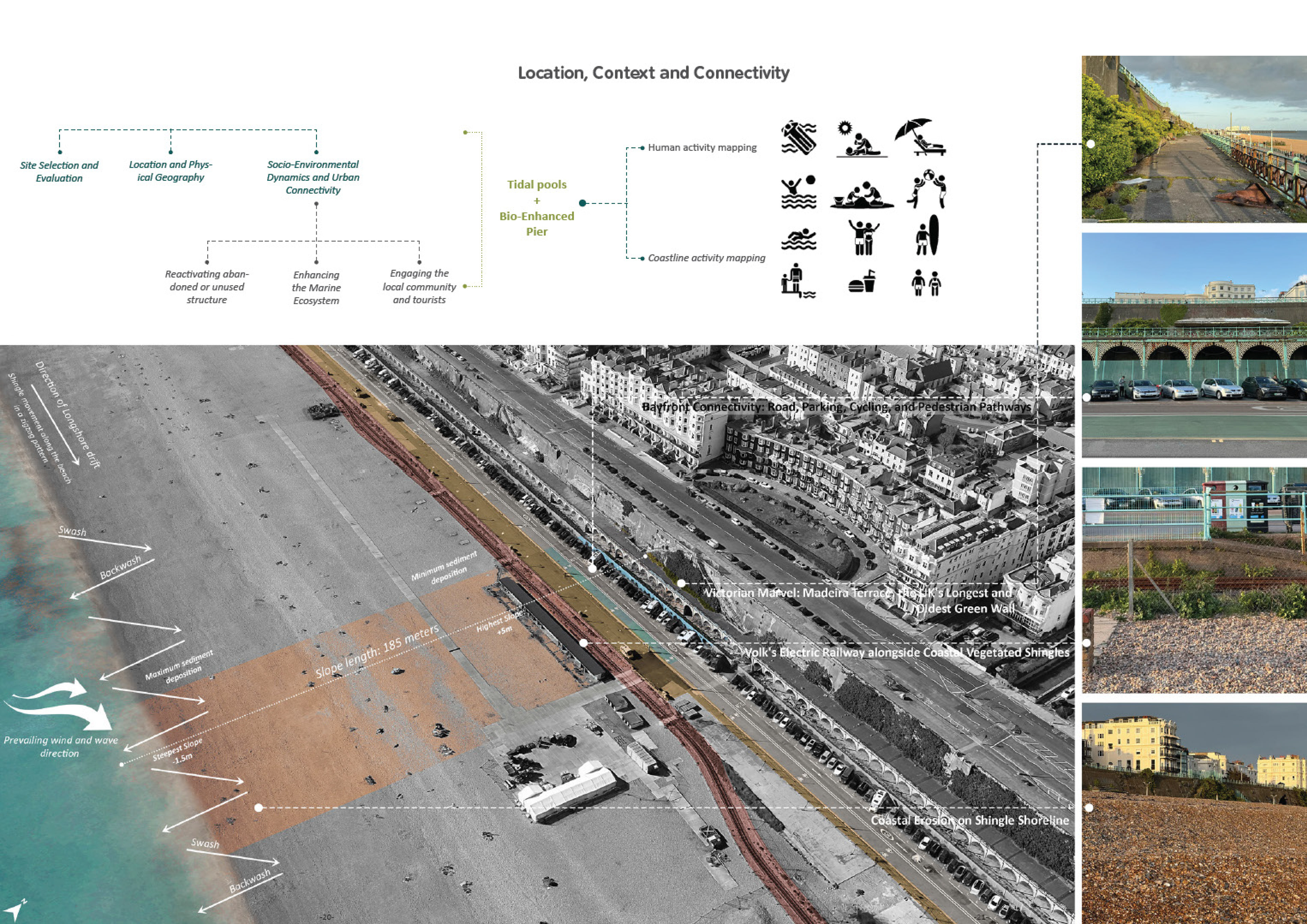
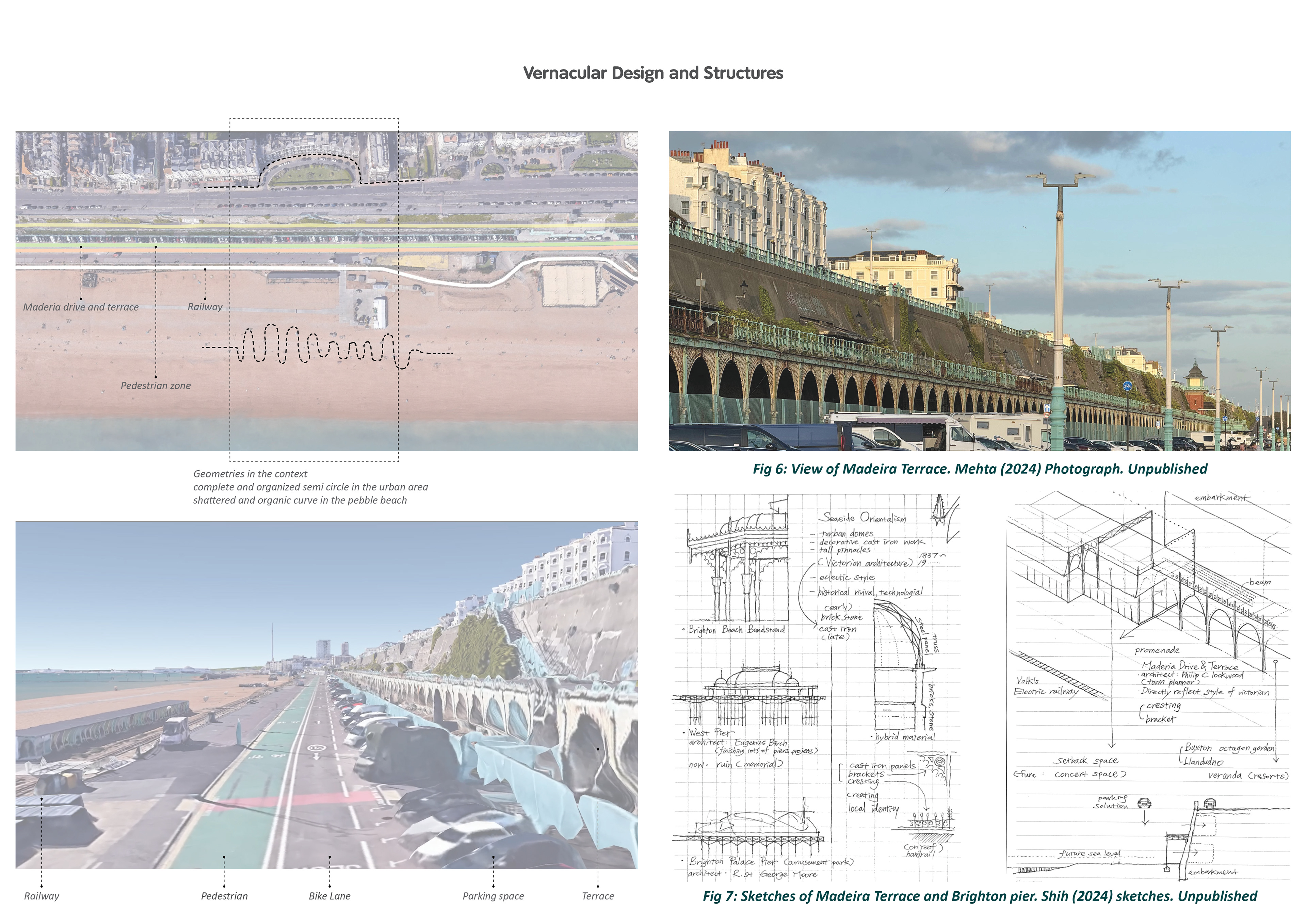
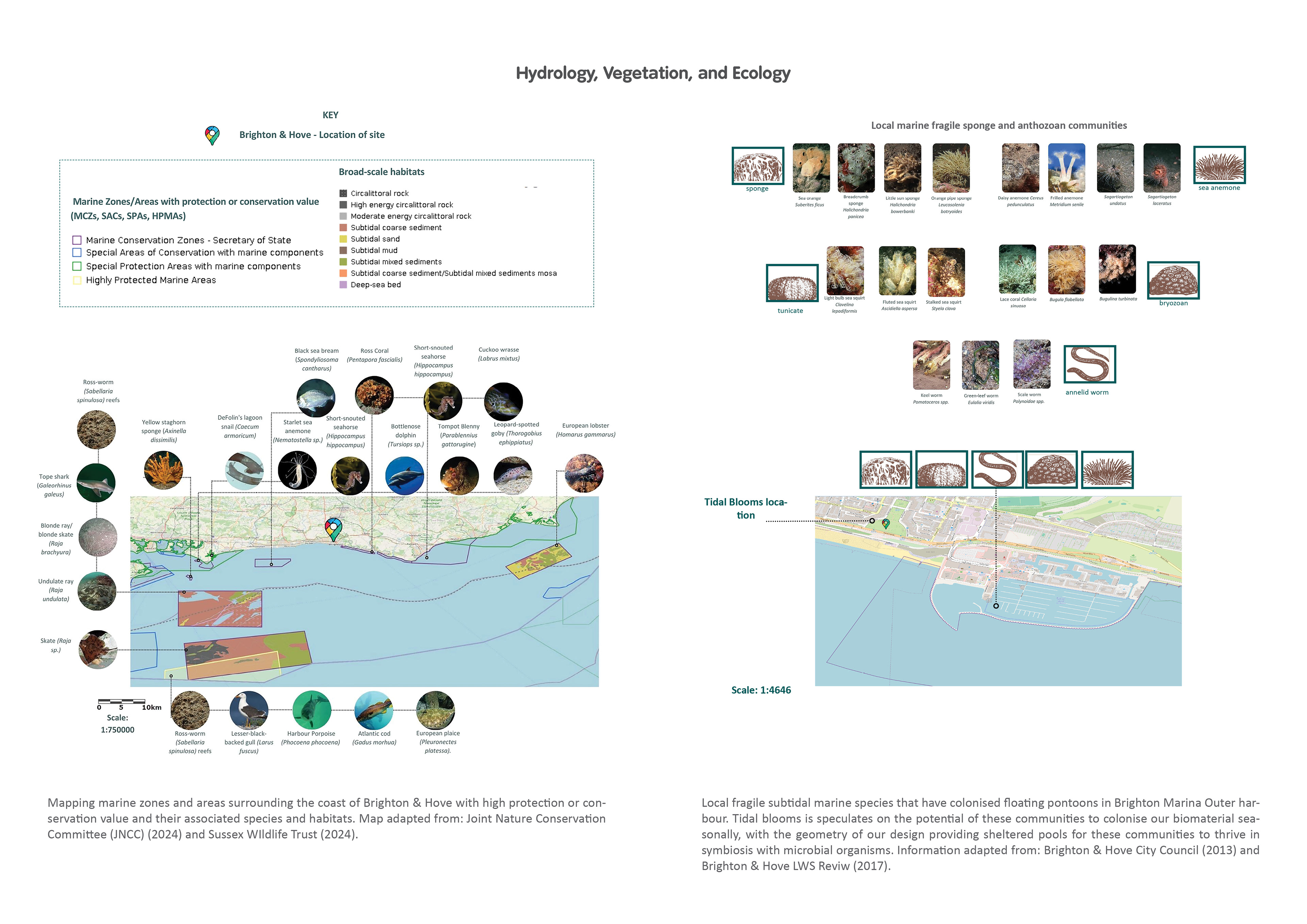
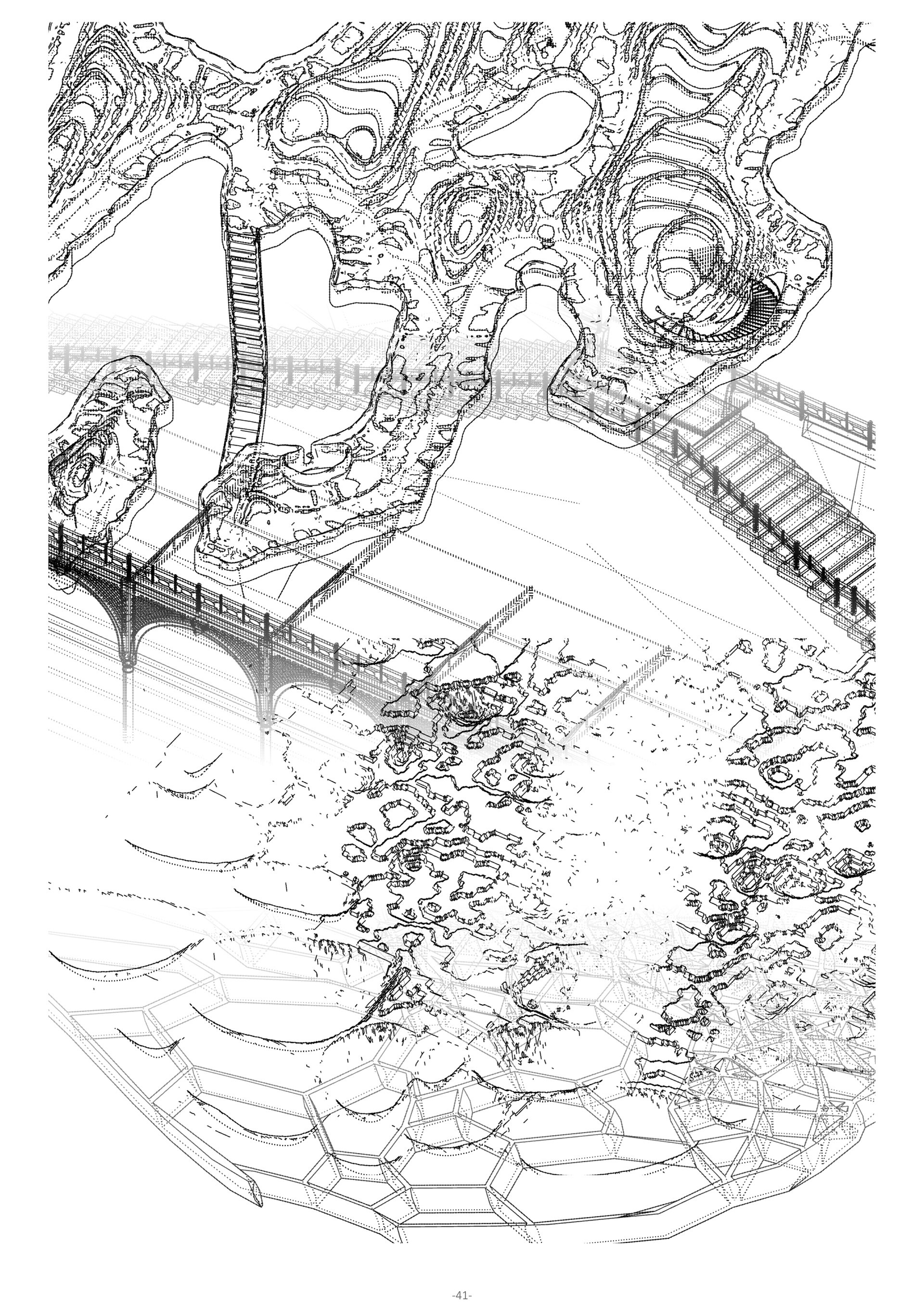
Tidal Blooms is a forward-thinking urban landscape intervention that reimagines Brighton Beach as a living, breathing interface between human habitation and marine ecology. Anchored along the historic Madeira Drive, the project responds to critical environmental challenges—such as ocean acidification and rising sea temperatures—identified by Brighton & Hove City Council’s Climate Adaptation Plan.
This speculative yet materially grounded proposal introduces Bioshell, a custom-designed, bioreceptive ceramic system rich in calcium carbonate, engineered to support biodiversity and marine regeneration. By acting as microhabitats and nutrient absorbers, these materials offer a responsive infrastructure for ecological growth at the edge of urbanity.
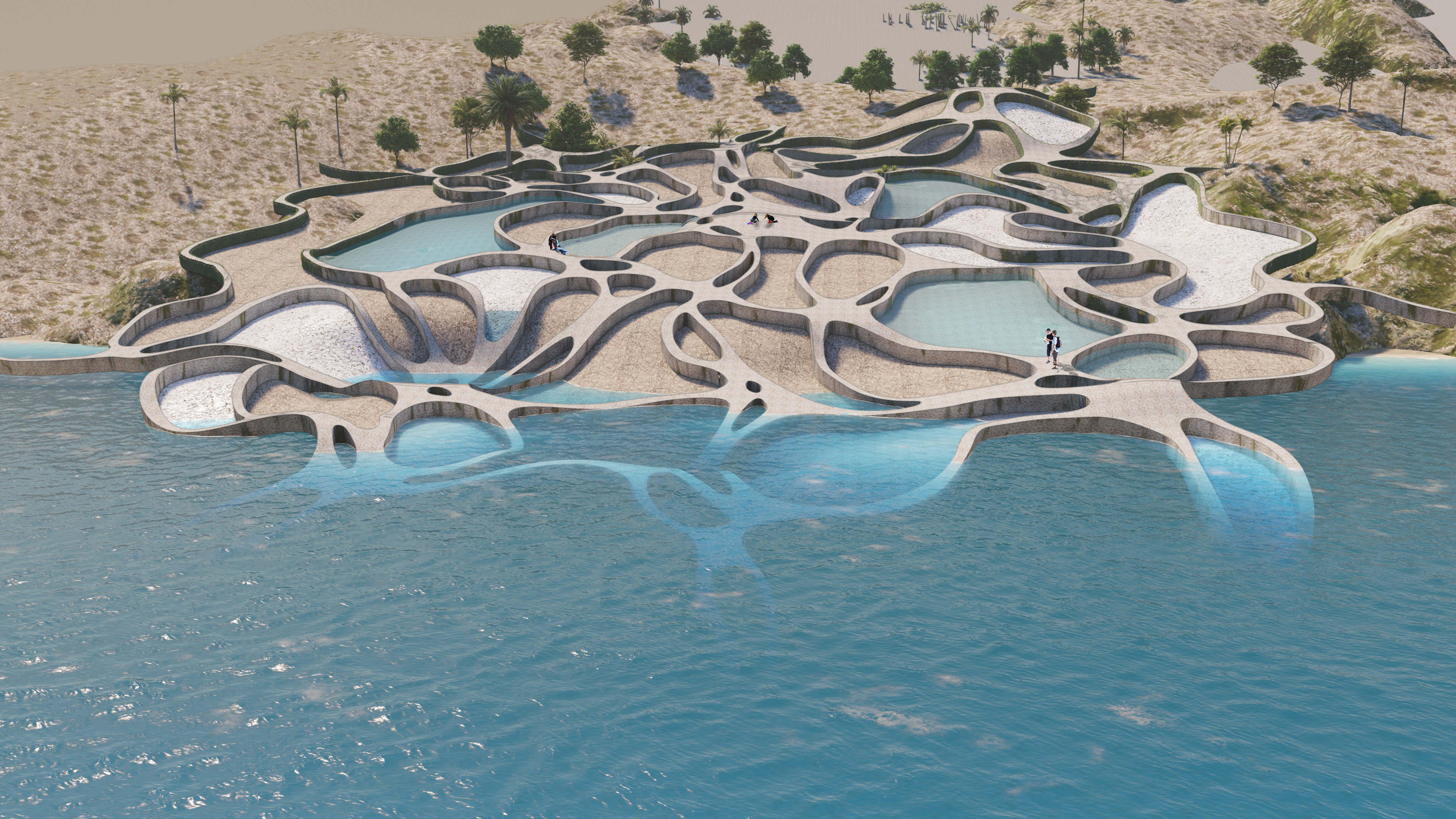
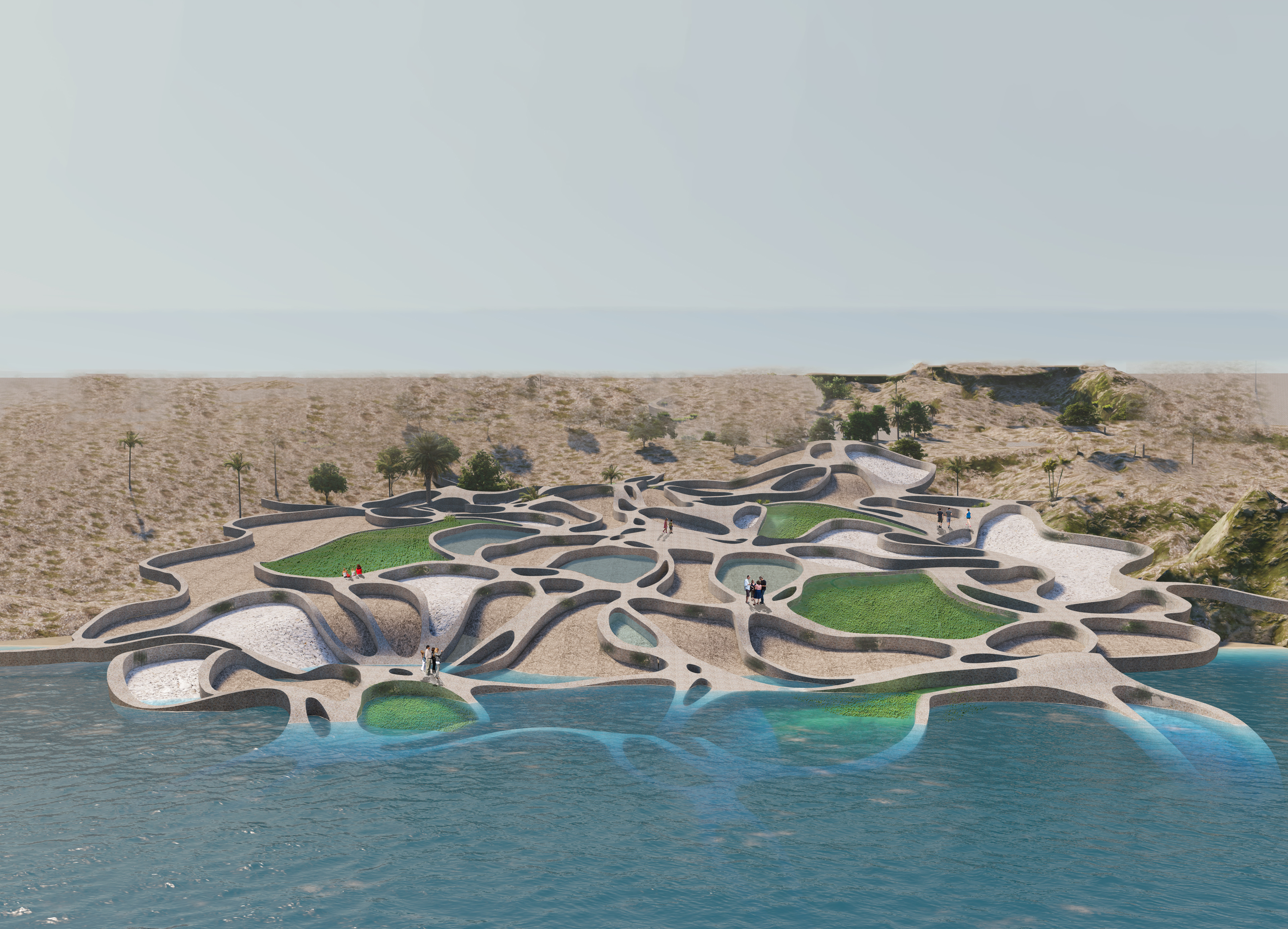
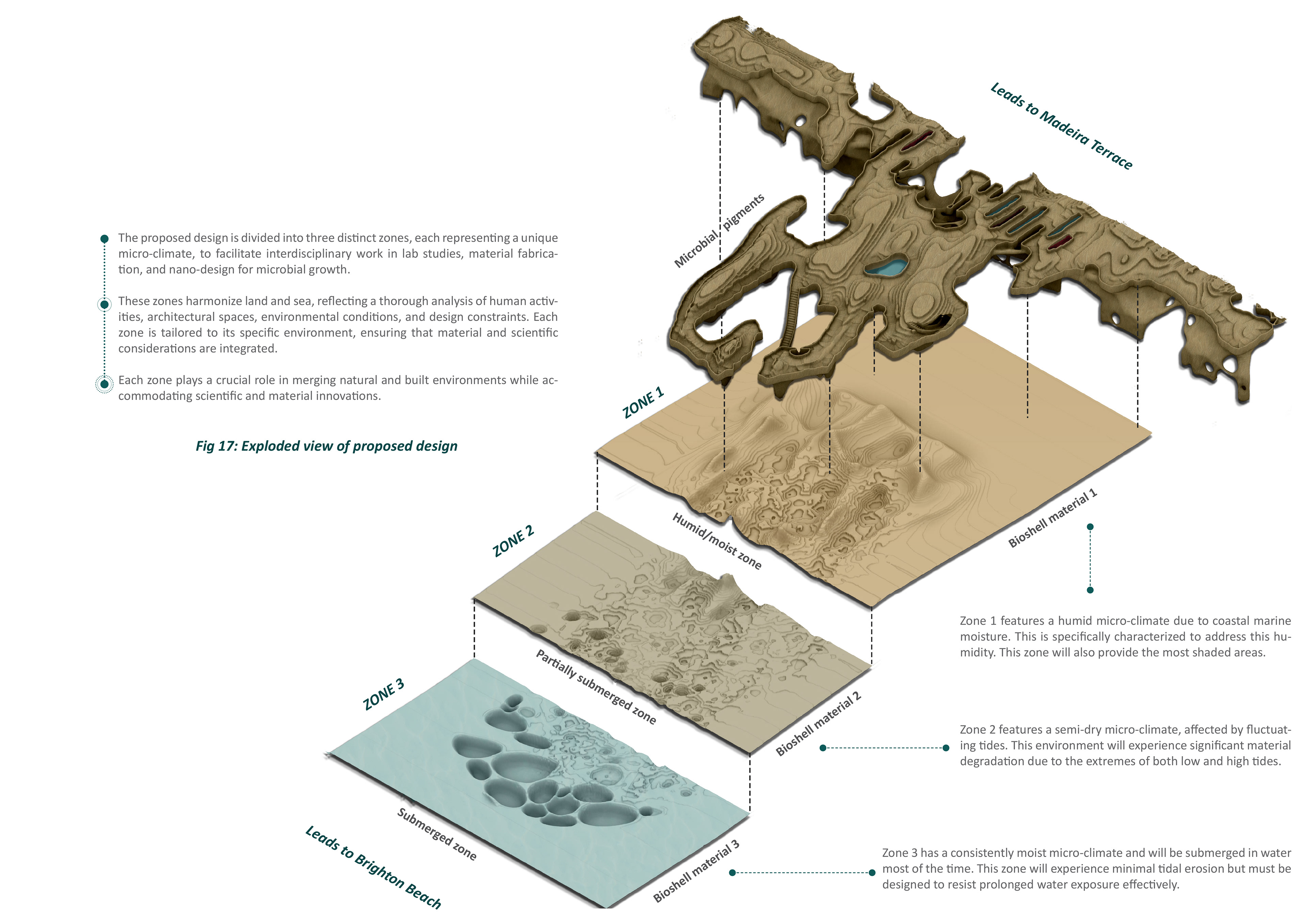
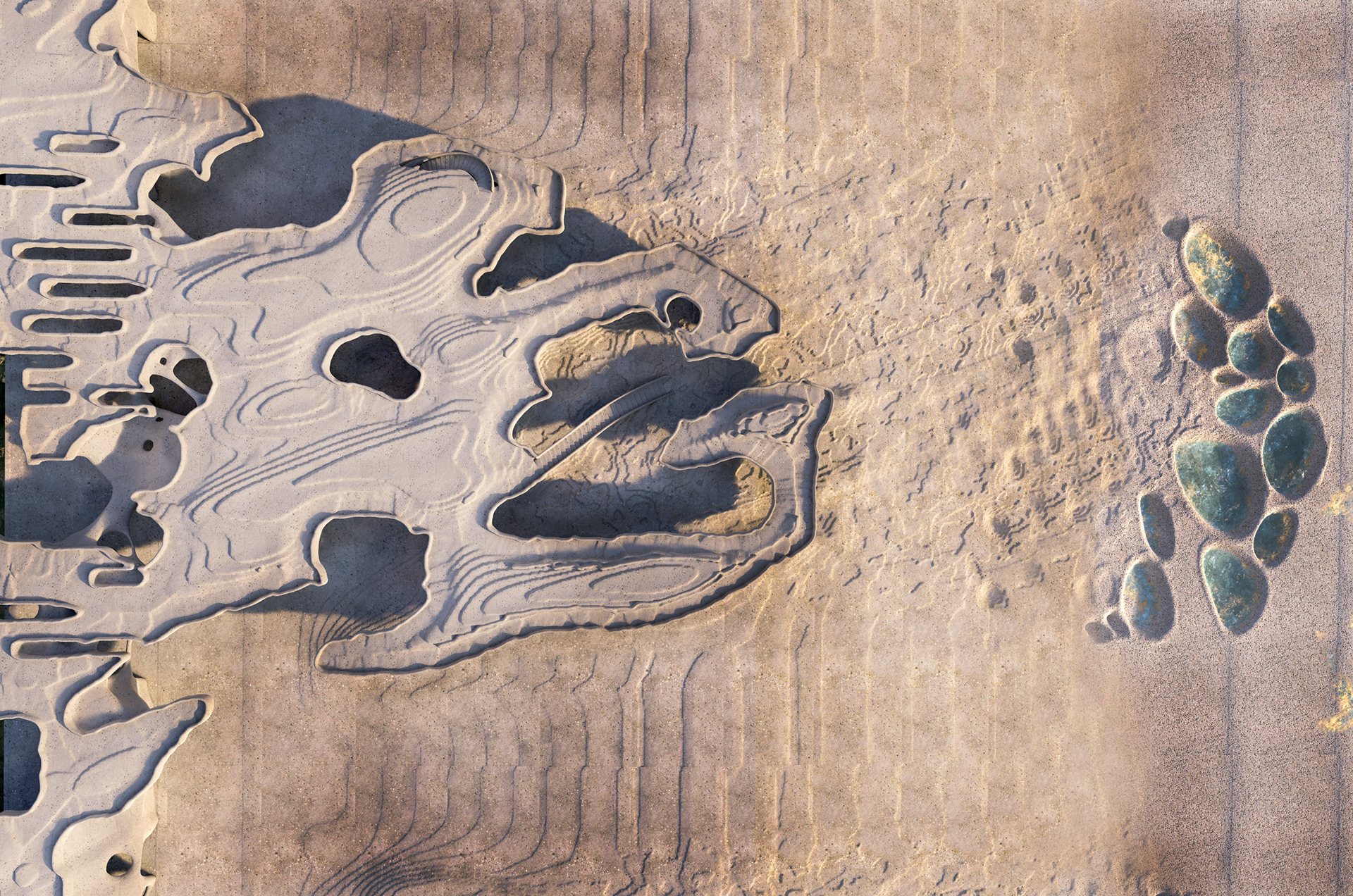
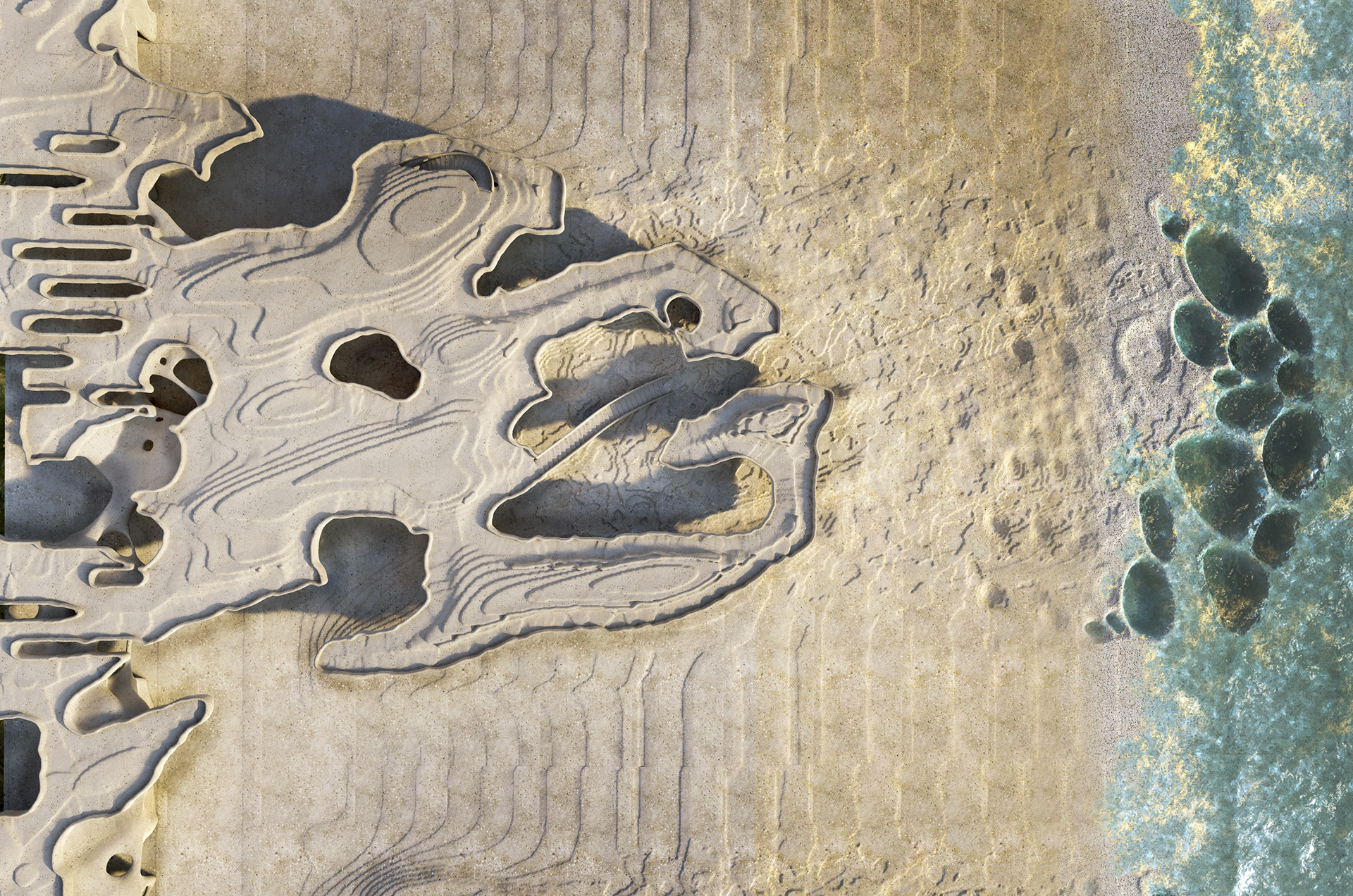
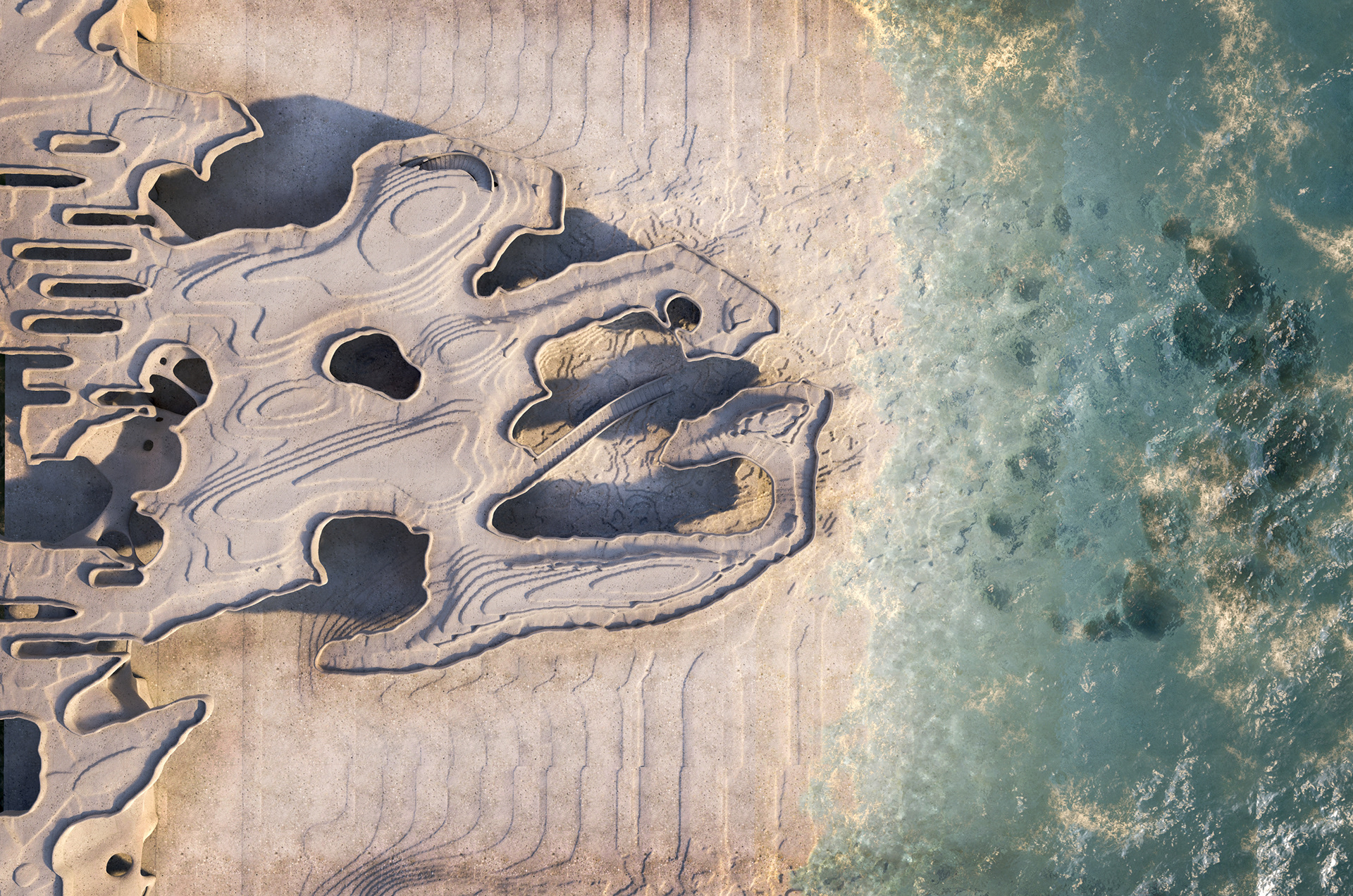
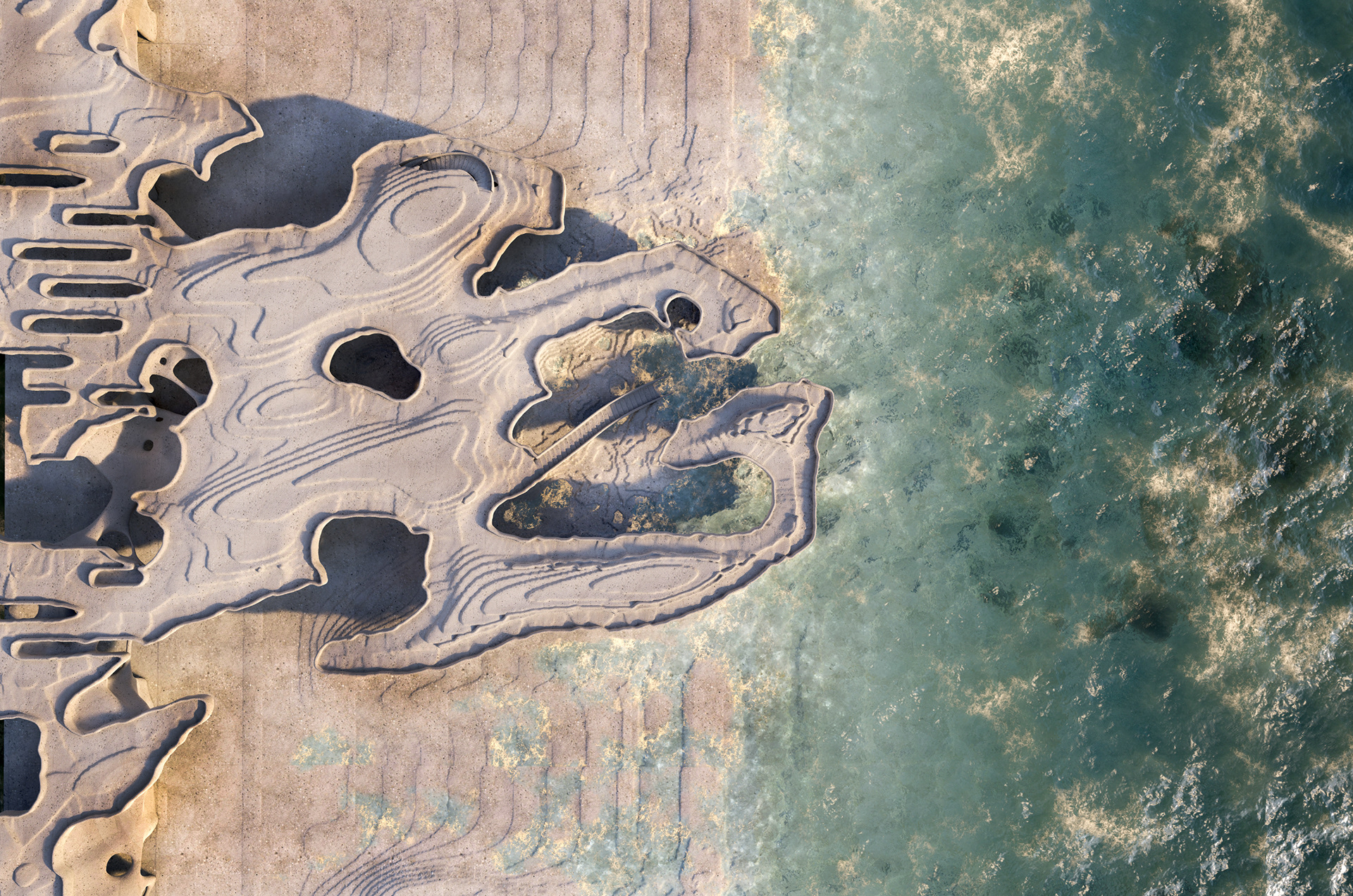
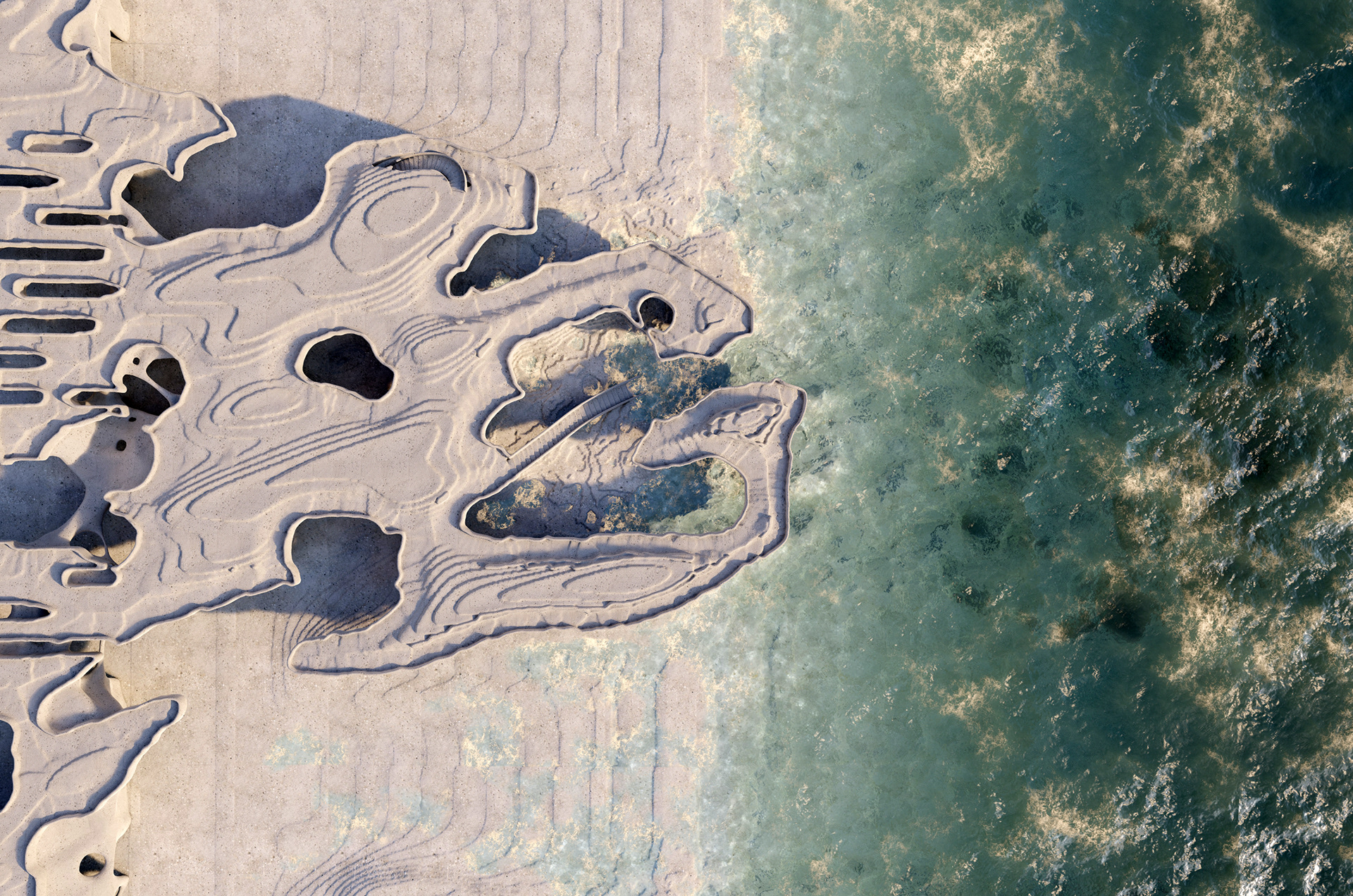
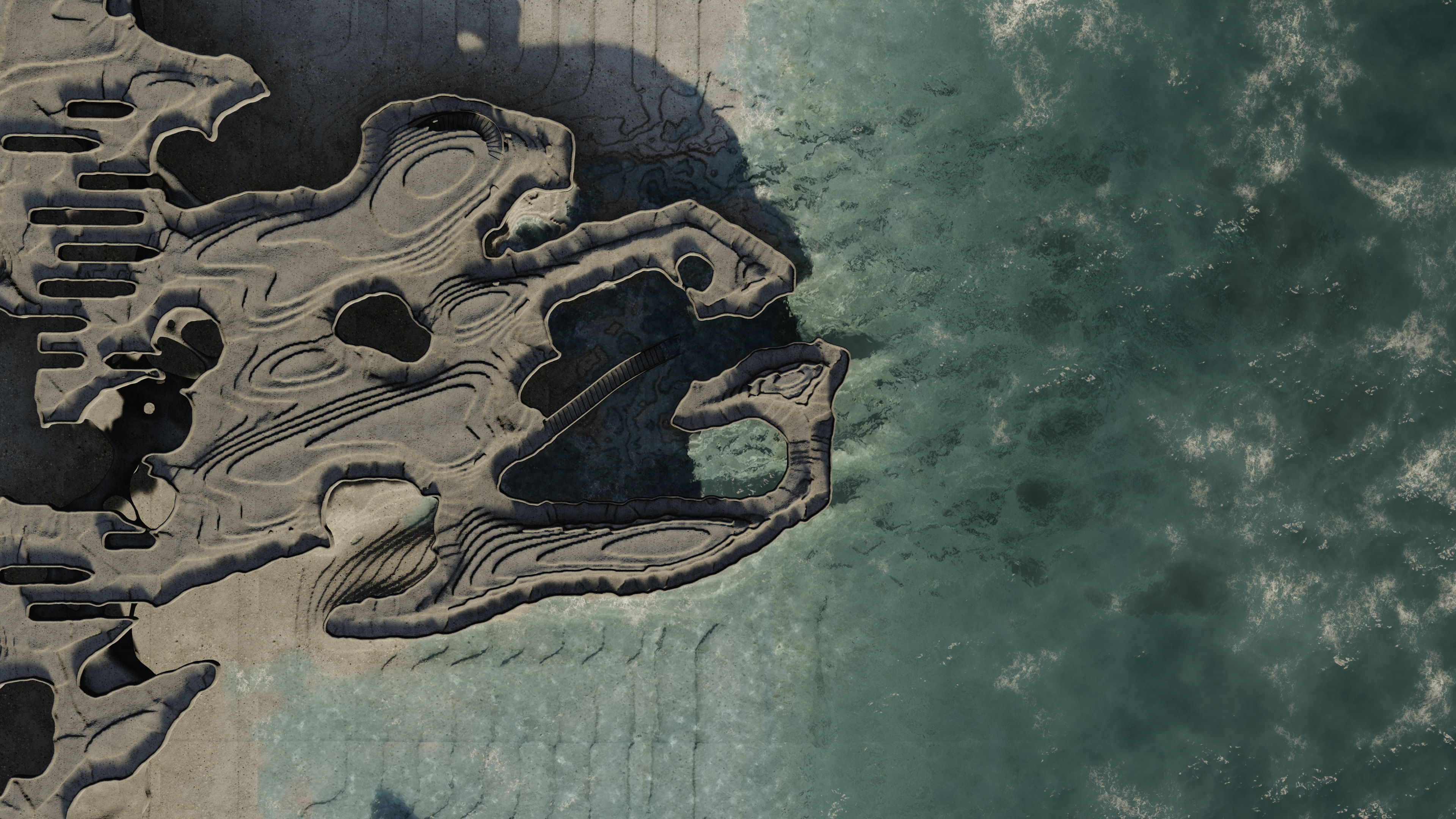
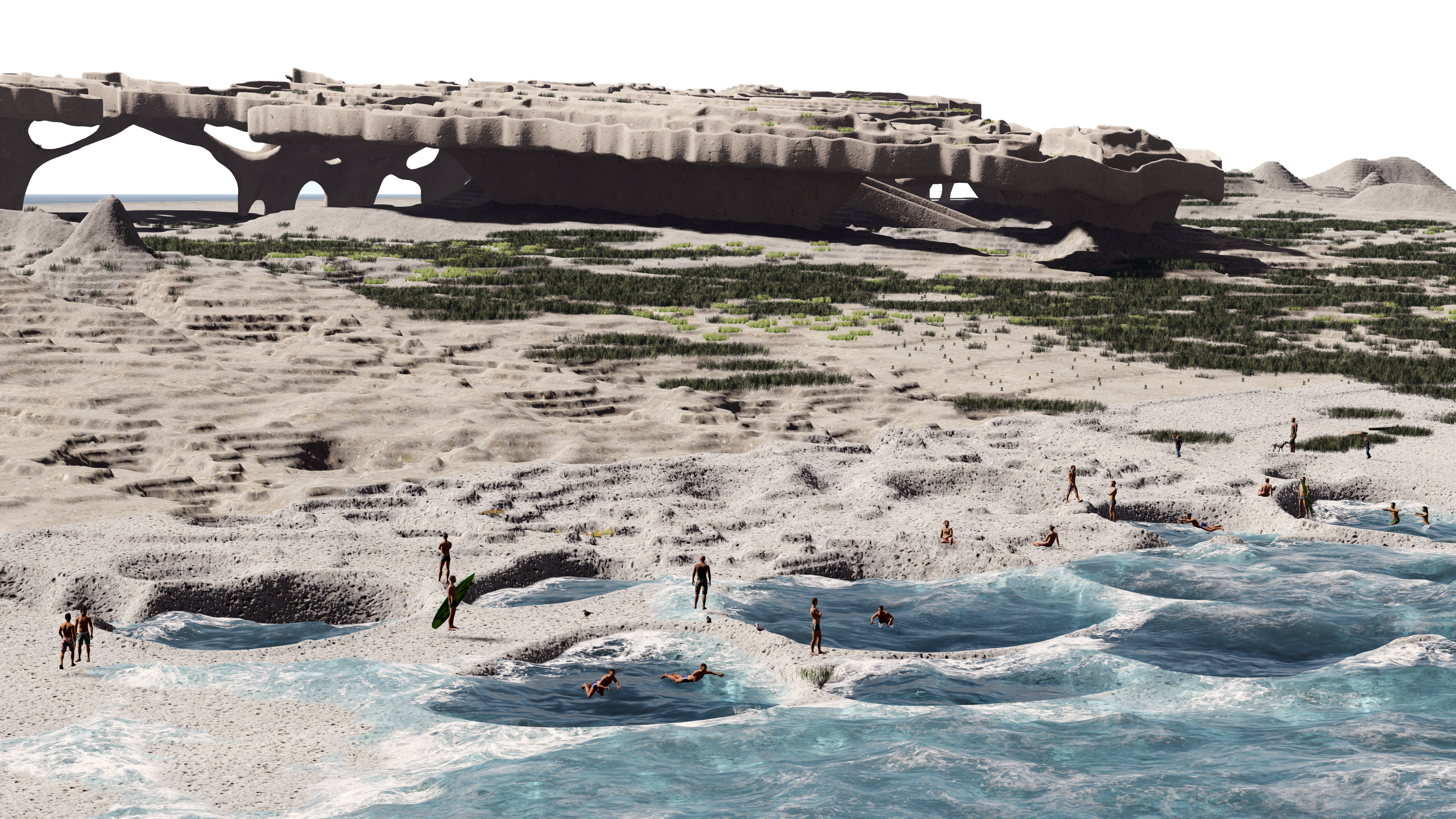
Organised into three experiential zones, Tidal Blooms moves from a bio-integrated pier to a tidal pool landscape and finally to a fully submerged marine sanctuary. Each zone showcases a unique Bioshell material variation tailored to the coastal condition it inhabits—ranging from human interaction to underwater biodiversity.
At its core, Tidal Blooms is not just a project—it's a proposal for climate-resilient coastal design, a fusion of material innovation, marine stewardship, and public engagement. It serves as a prototype for how architecture can nurture ecological systems while creating inclusive, experiential spaces for the future shoreline.
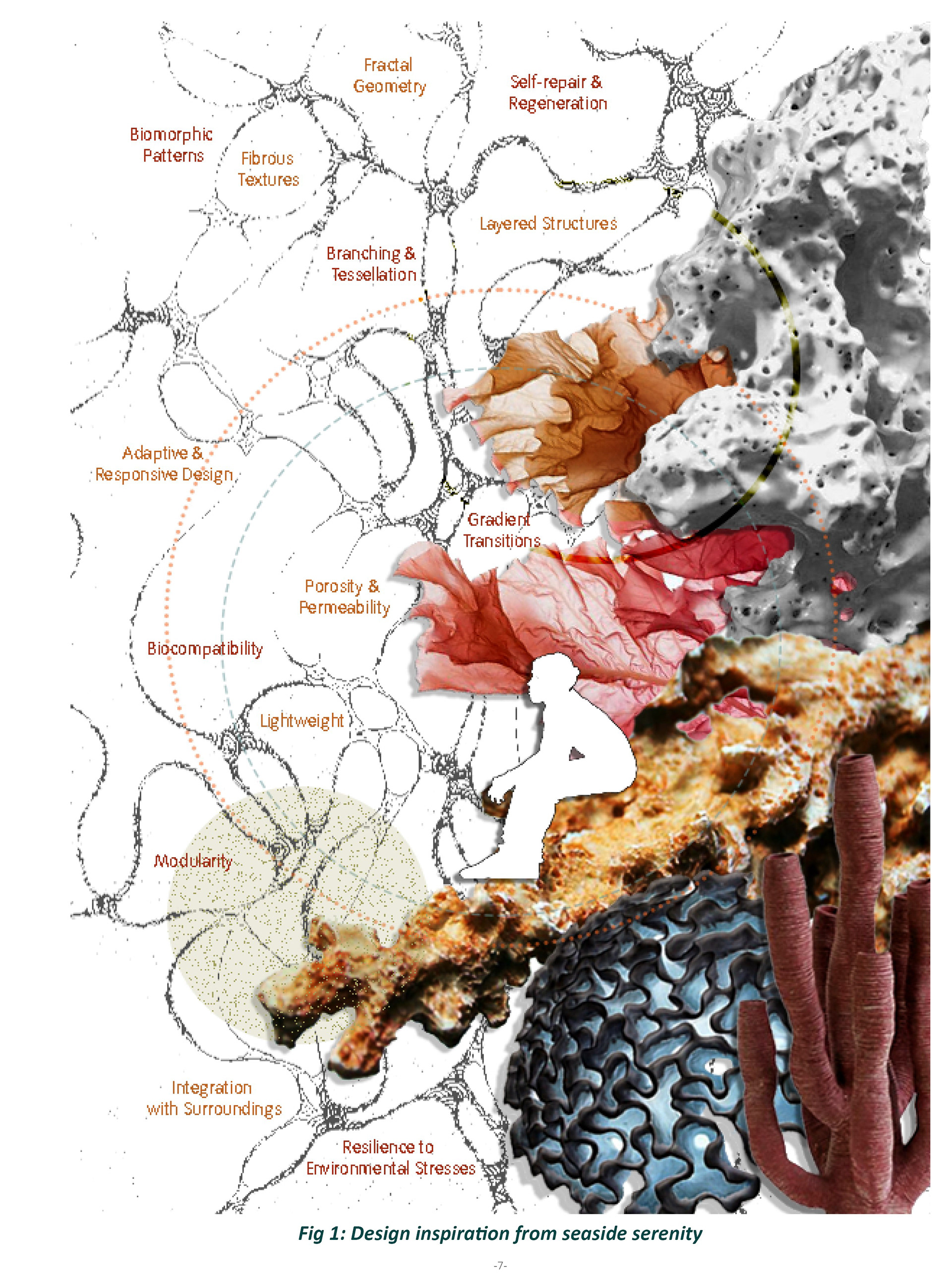
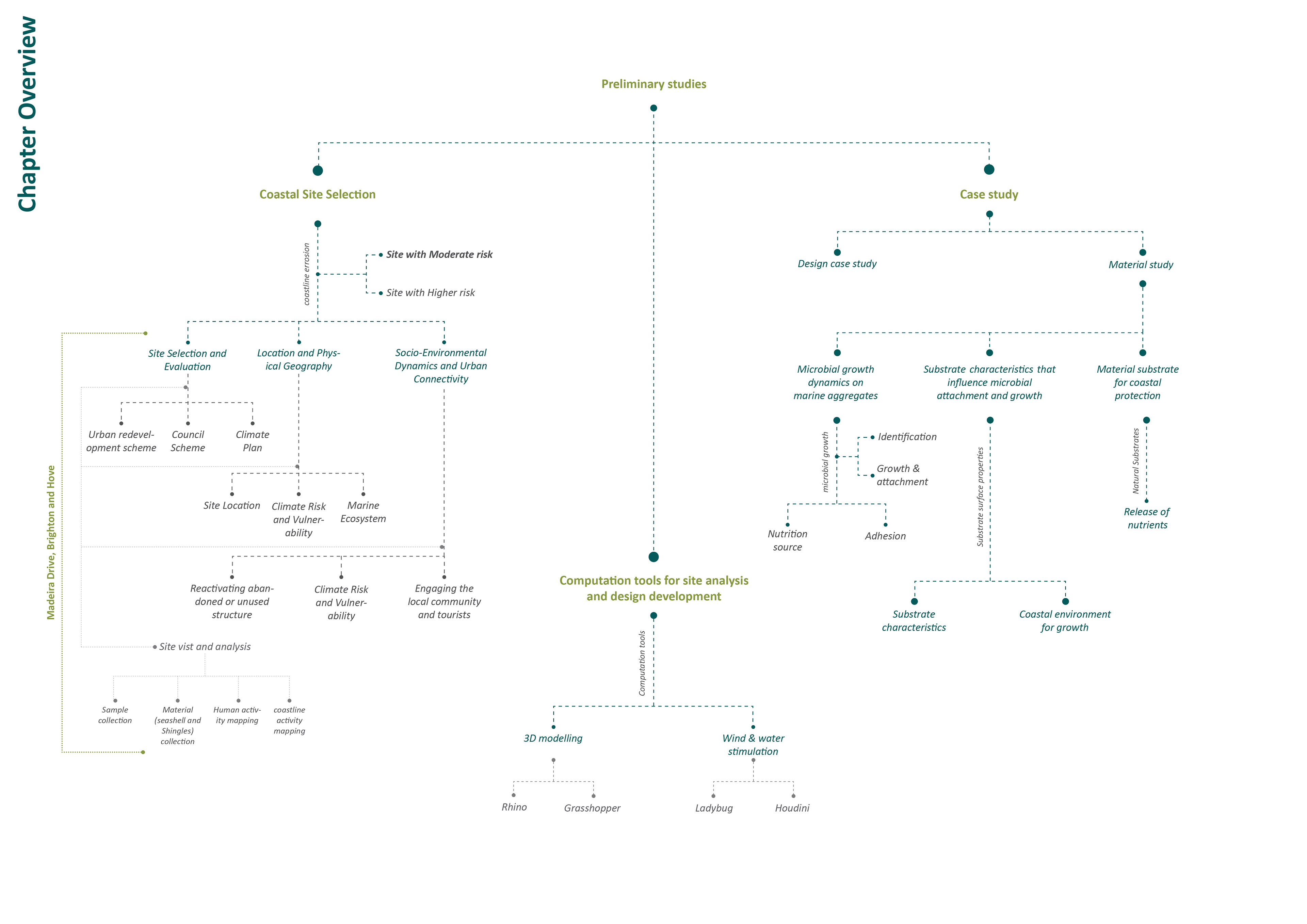
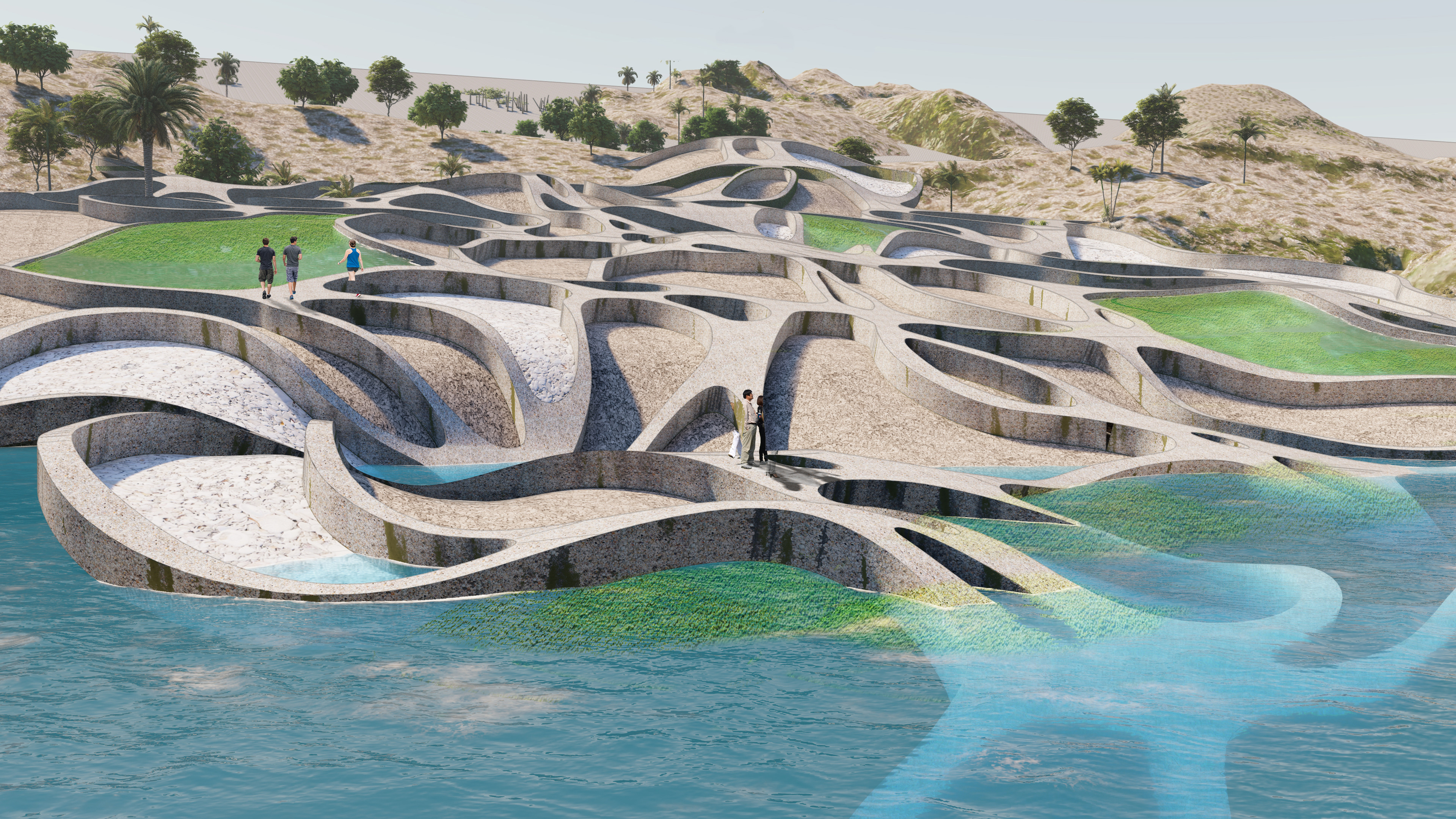
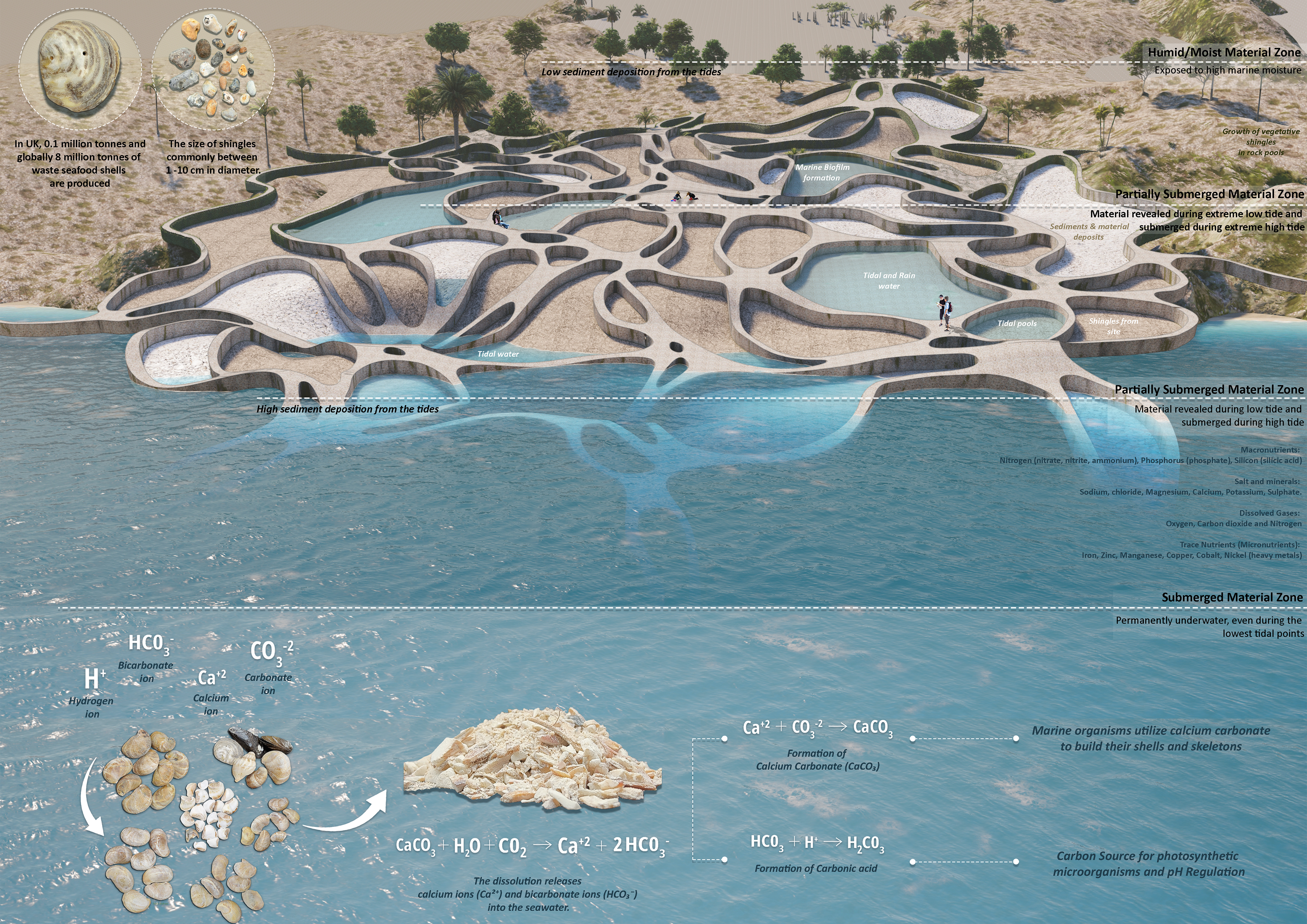
Initial Design Concept
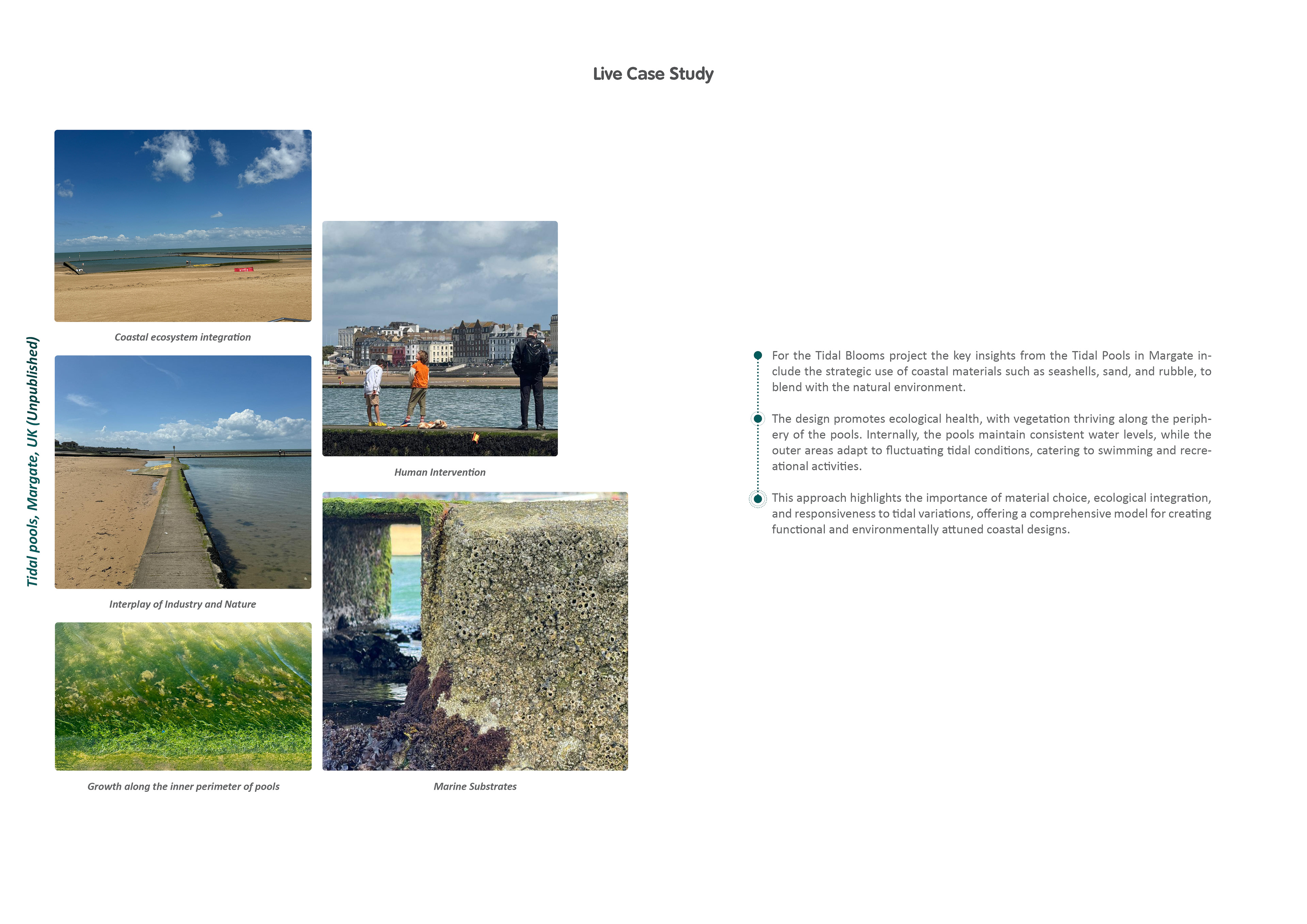
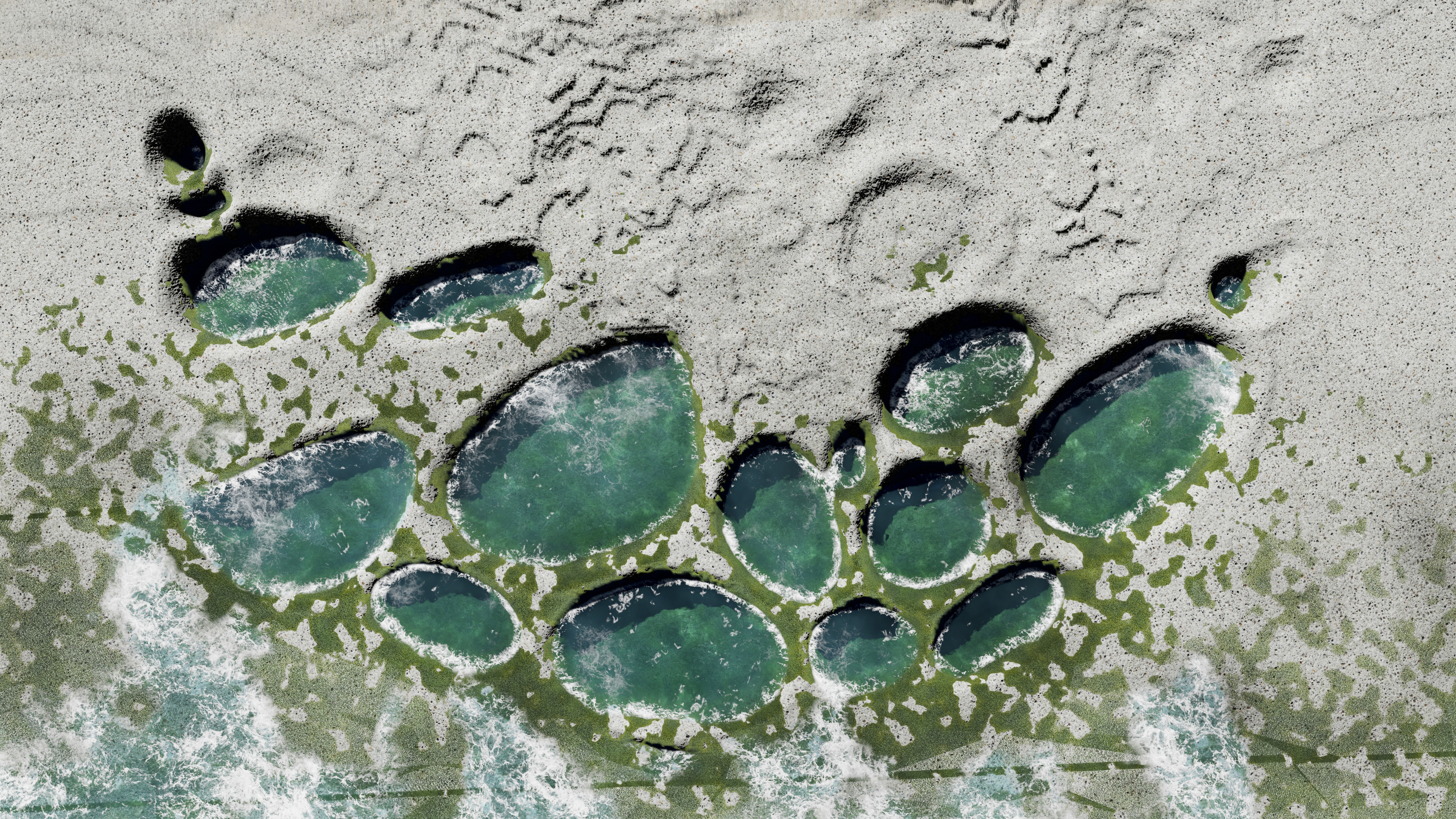
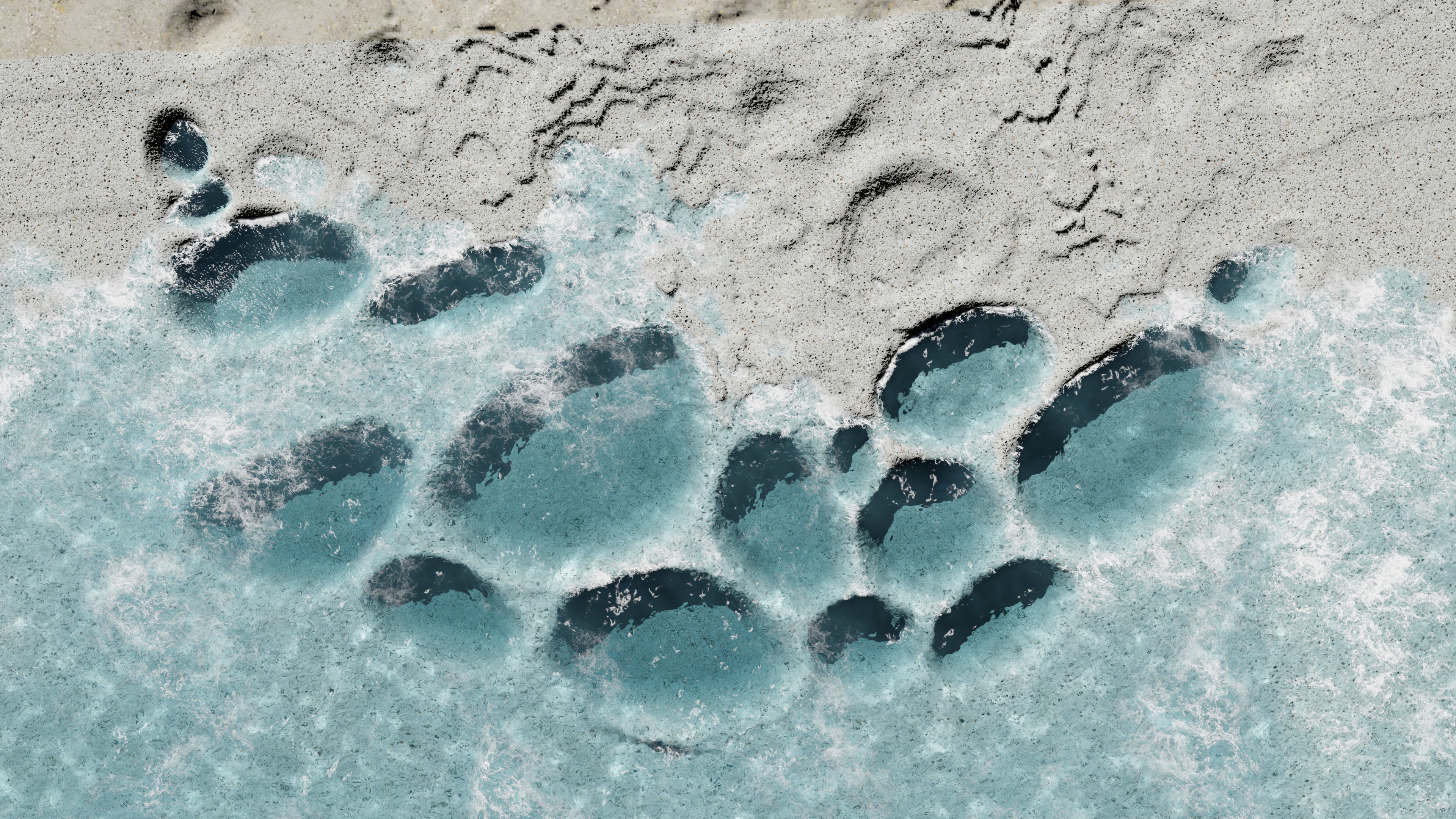
Live Case Study | Tidal Pools
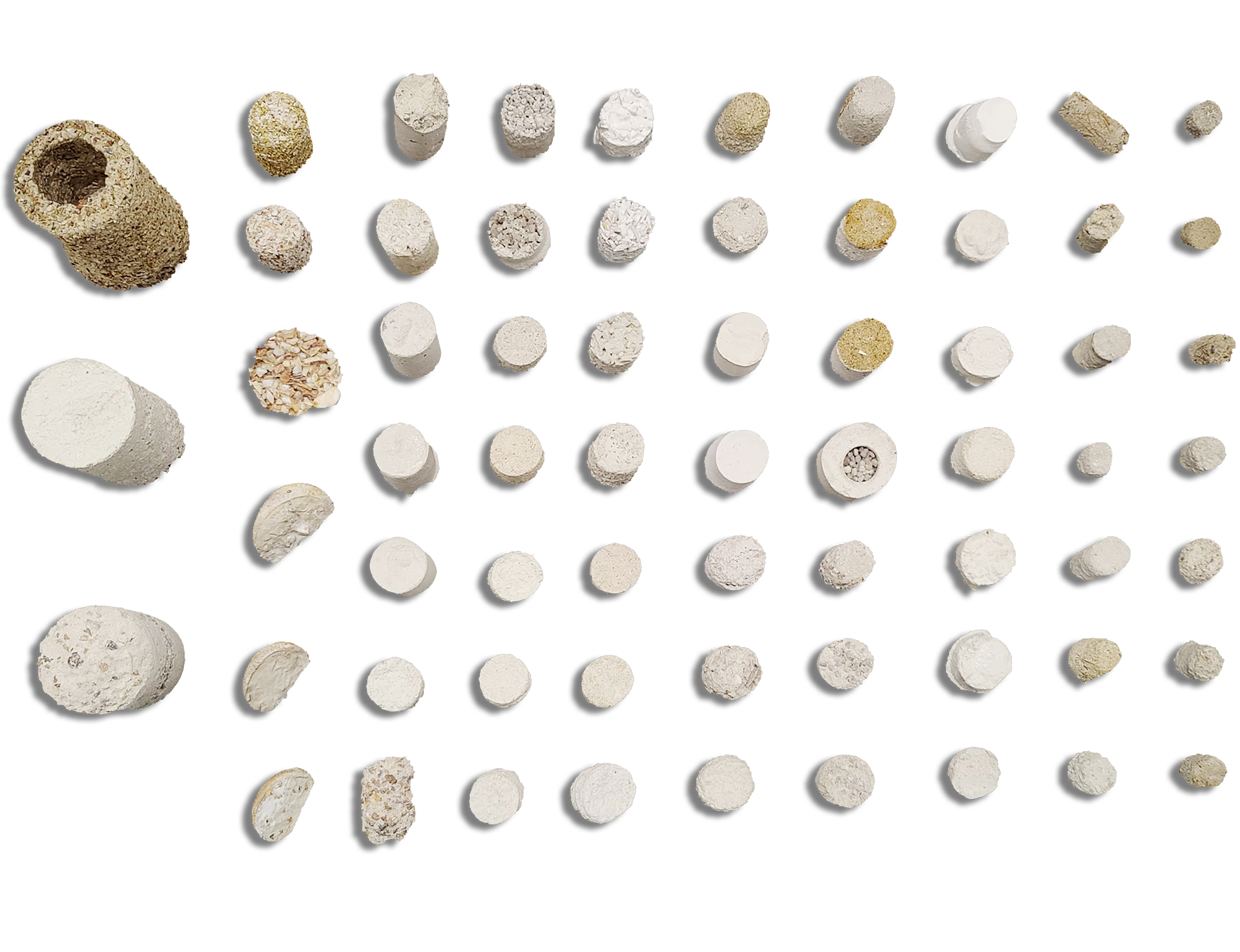
Bioshell | Material Catalogue
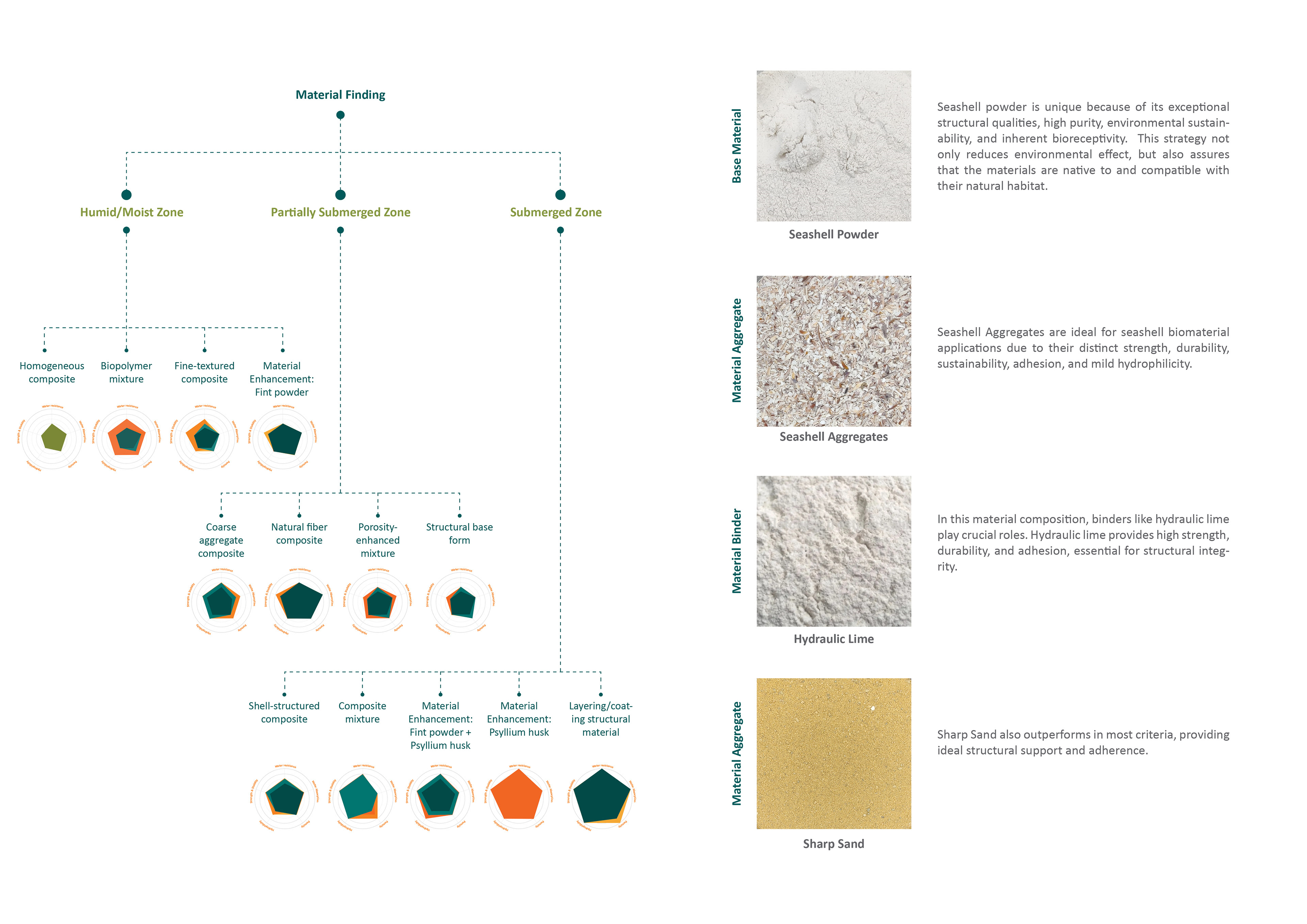
Preliminary Study | Material Exploration
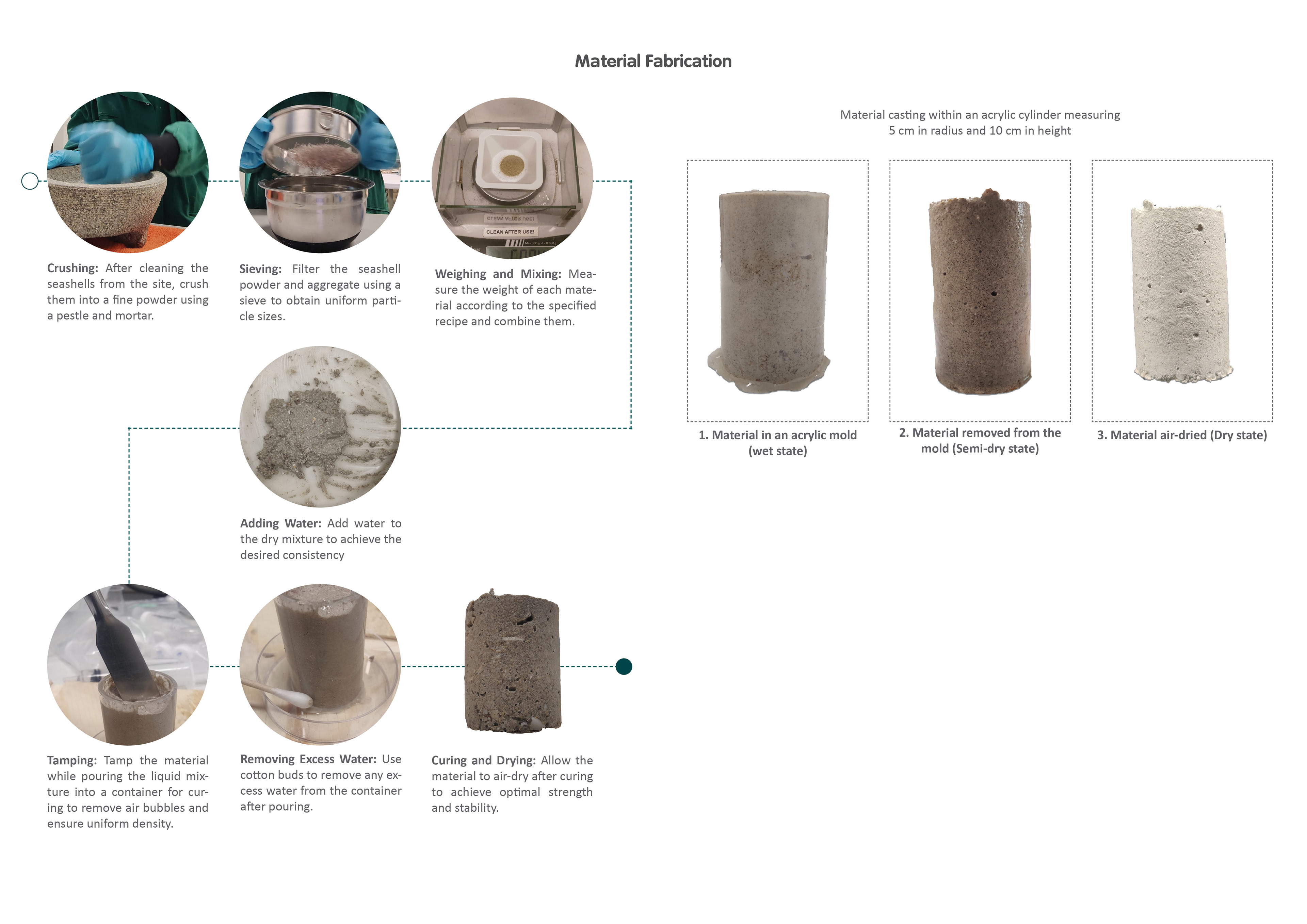
Small-scale material preparation in lab setting
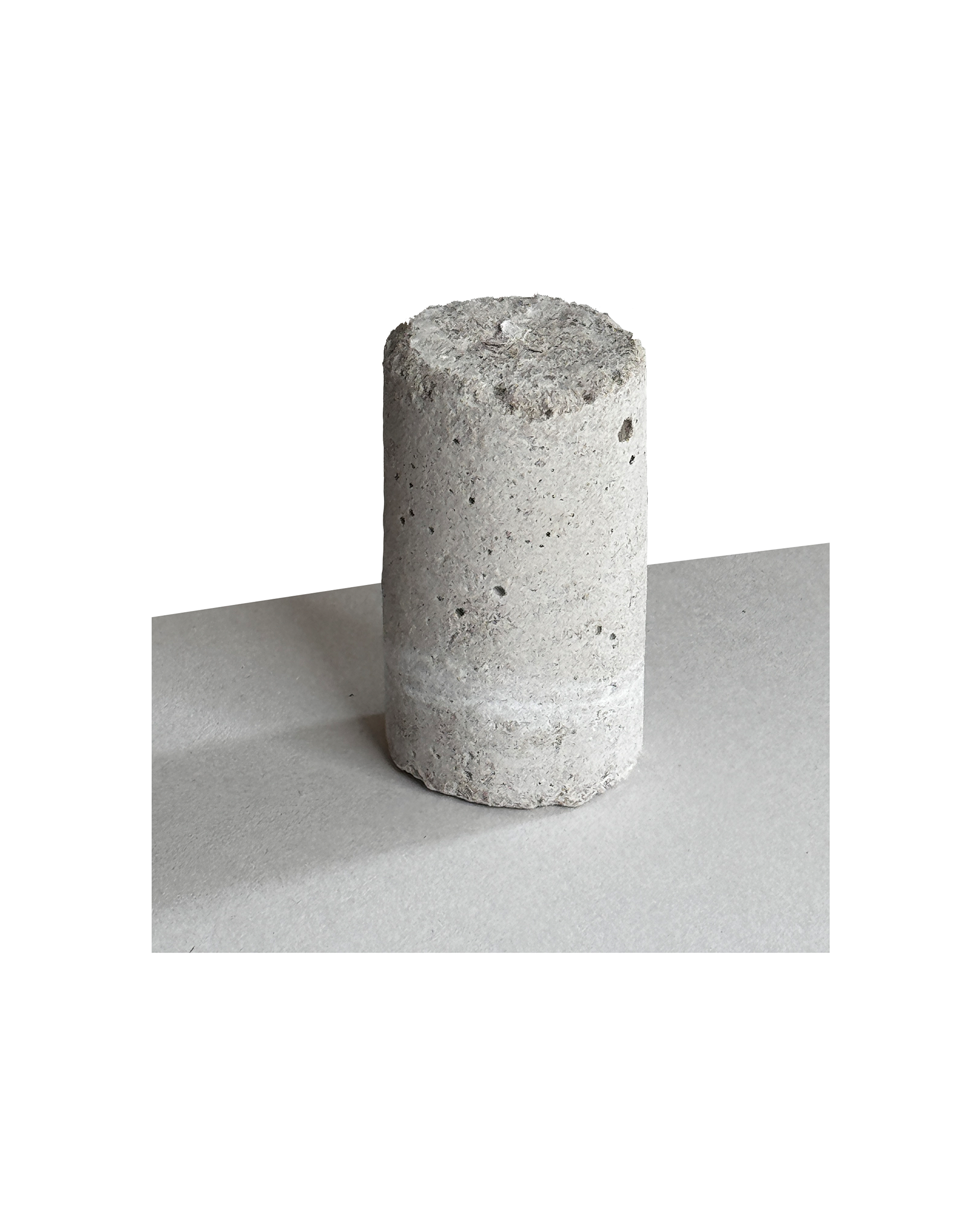
Bioshell Material 1
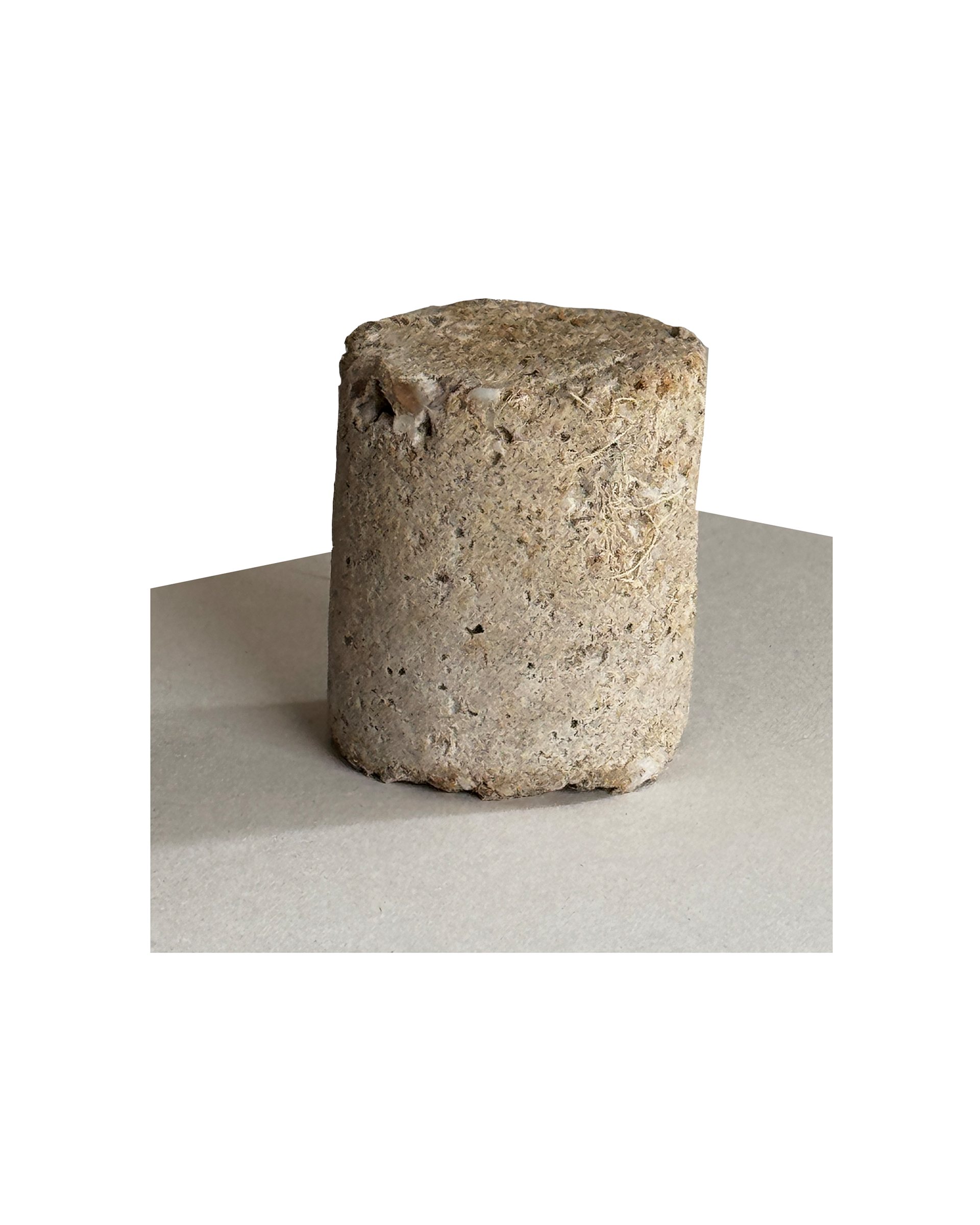
Bioshell Material 2
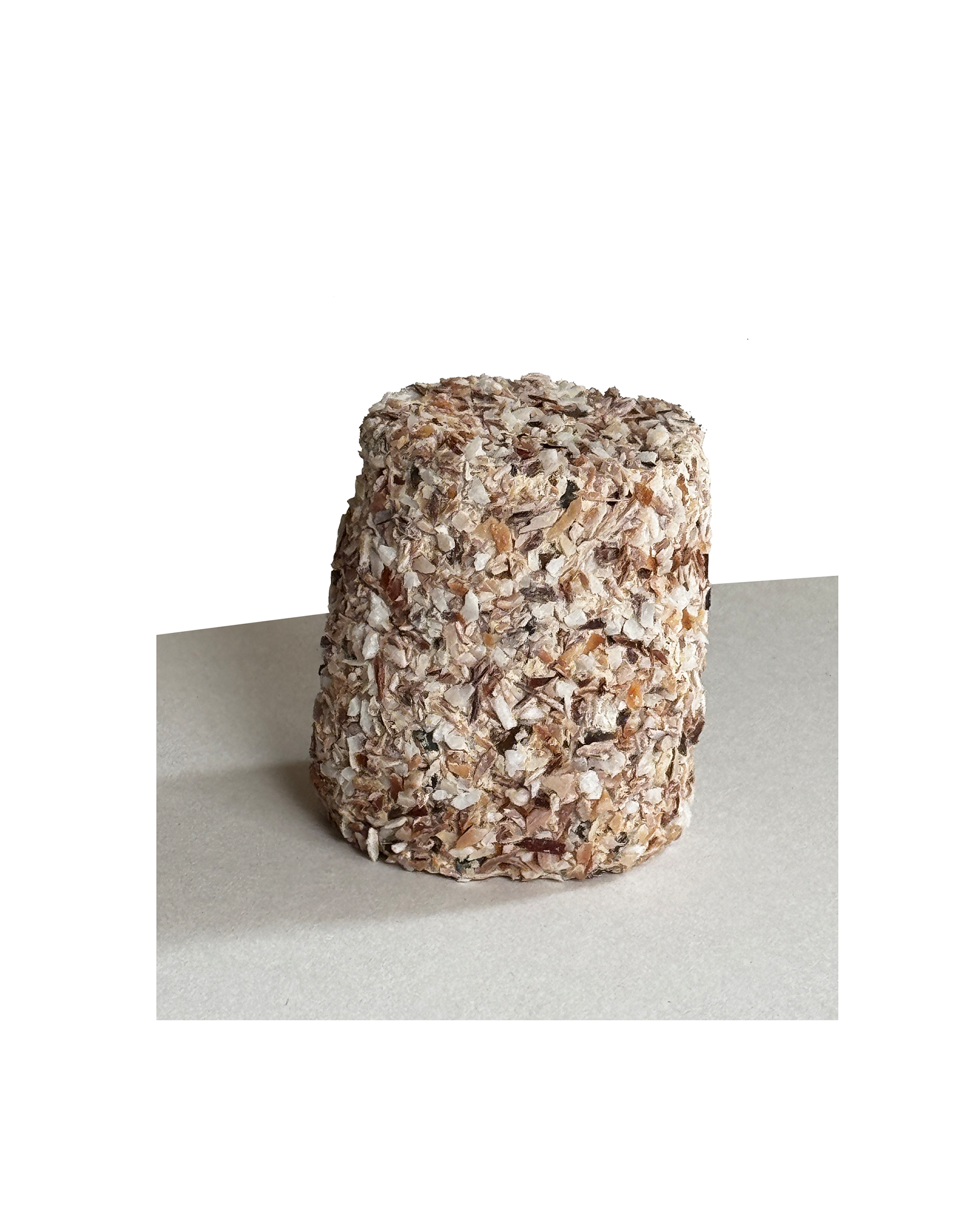
Bioshell Material 3
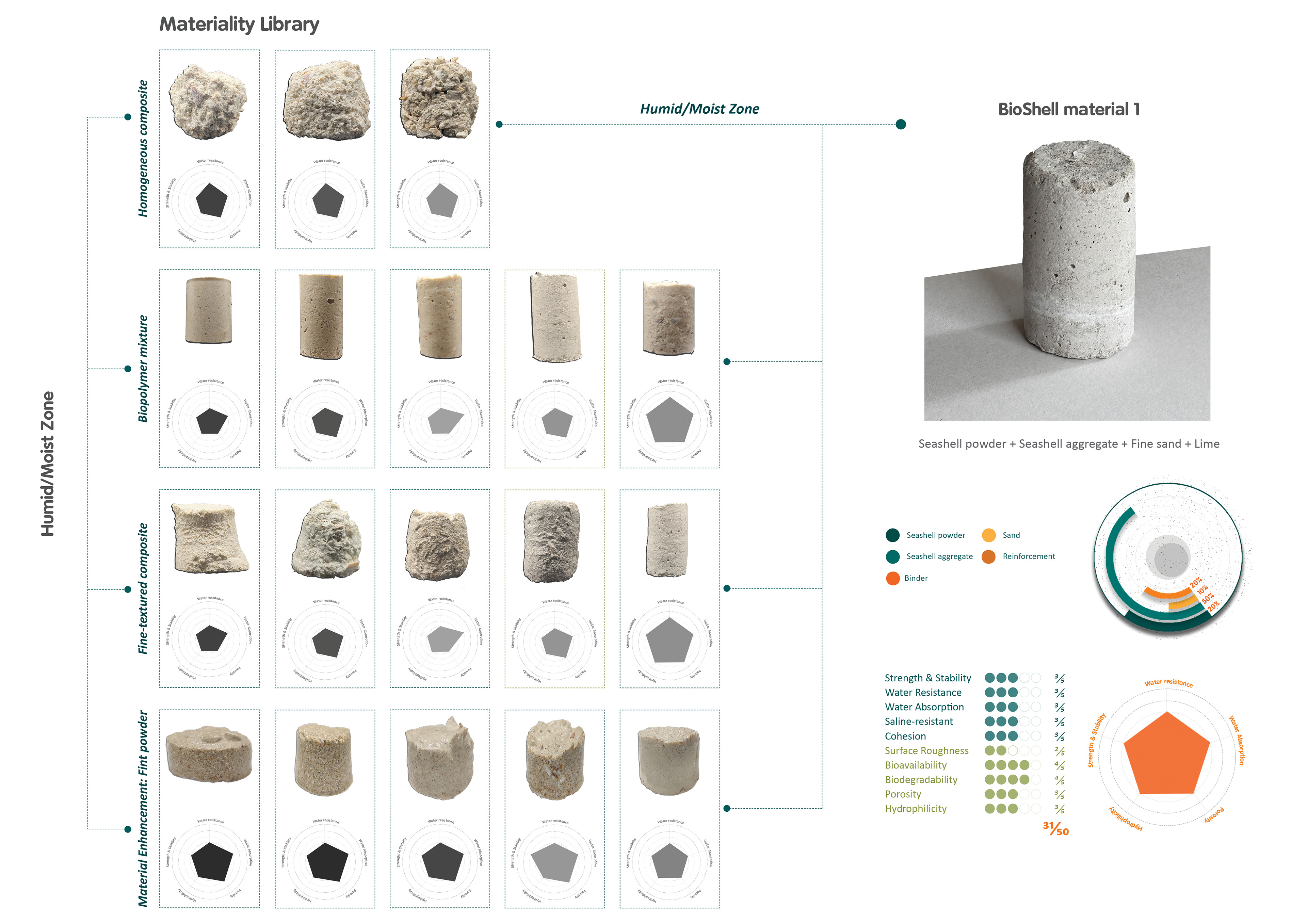
Zone 1 | Shoreline (Littoral) Zone | Bioshell Material 1
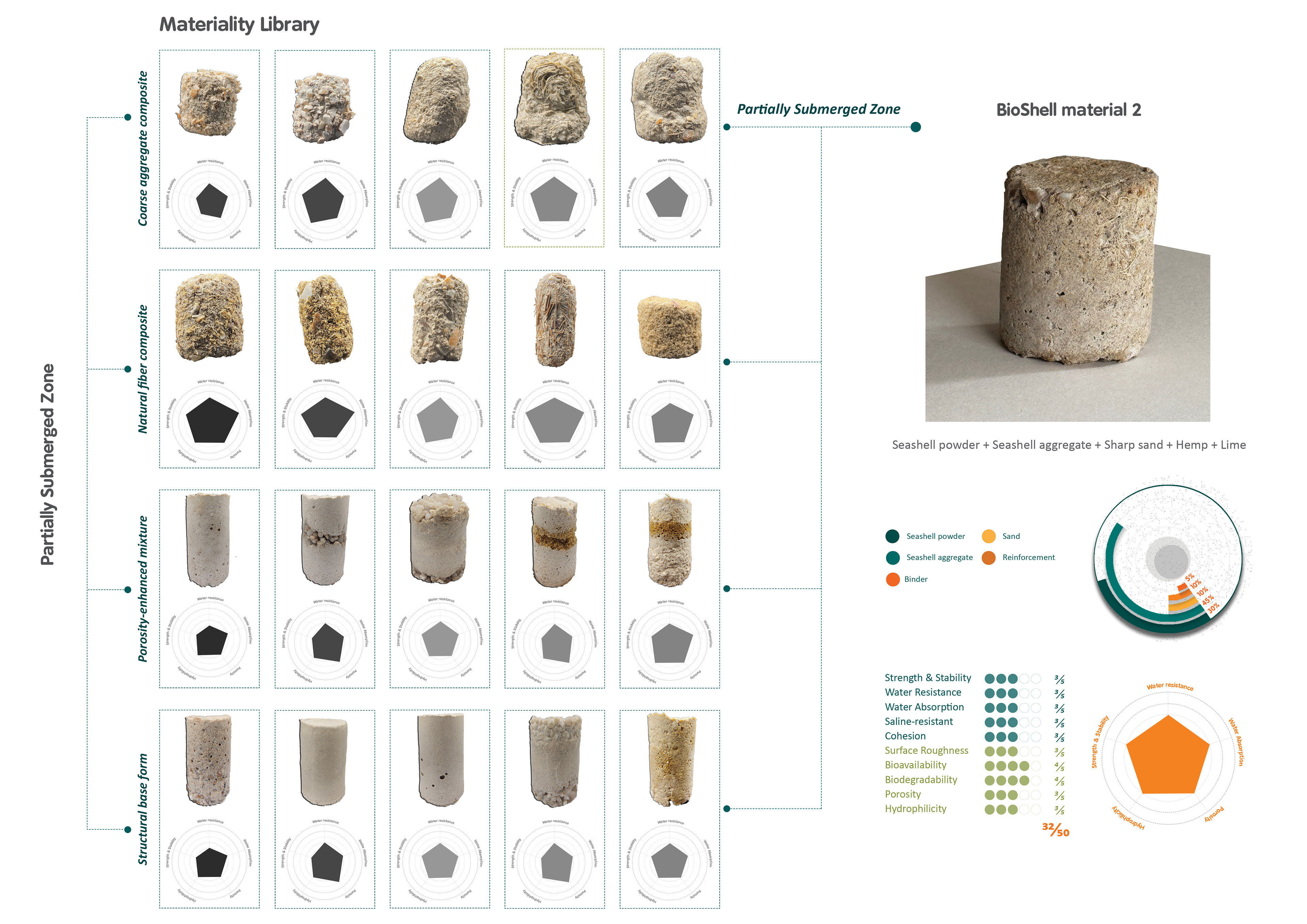
Zone 2 | Midwater (Semi-Submerged) Zone | Bioshell Material 2
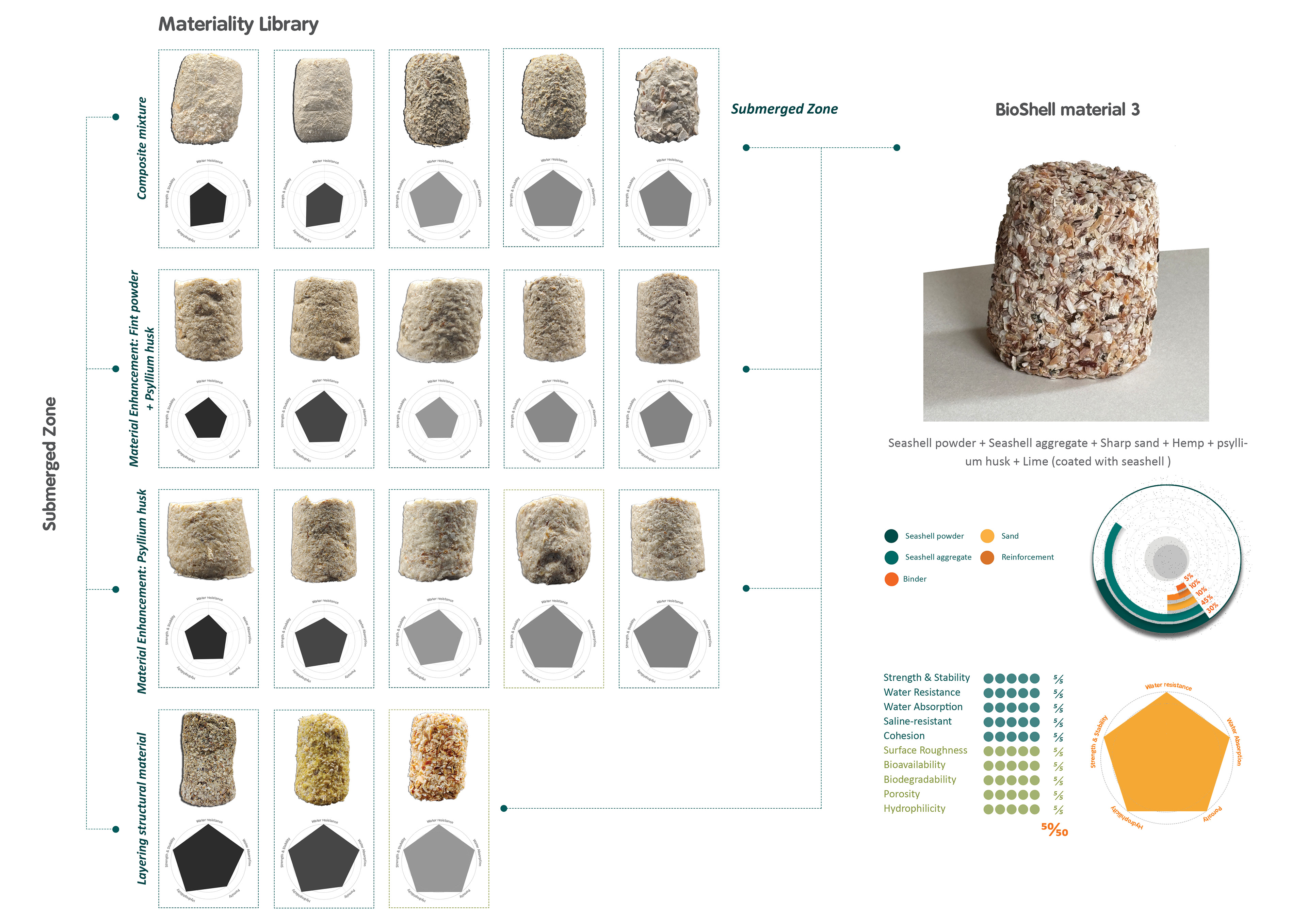
Zone 3 | Lakebed (Submerged Benthic) Zone | Bioshell Material 3
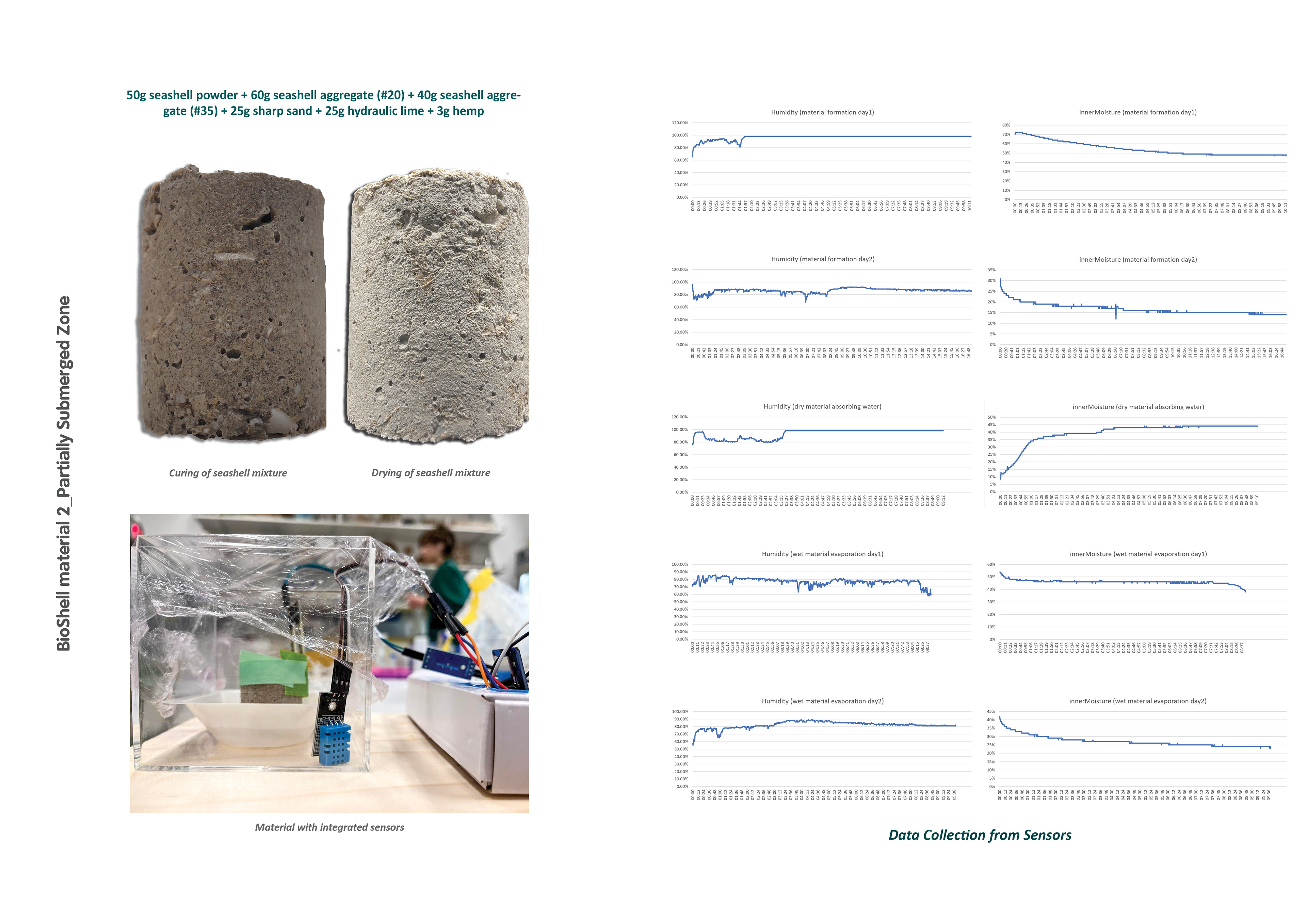
Bioshell Material 02 | Sensor-Integrated Prototype
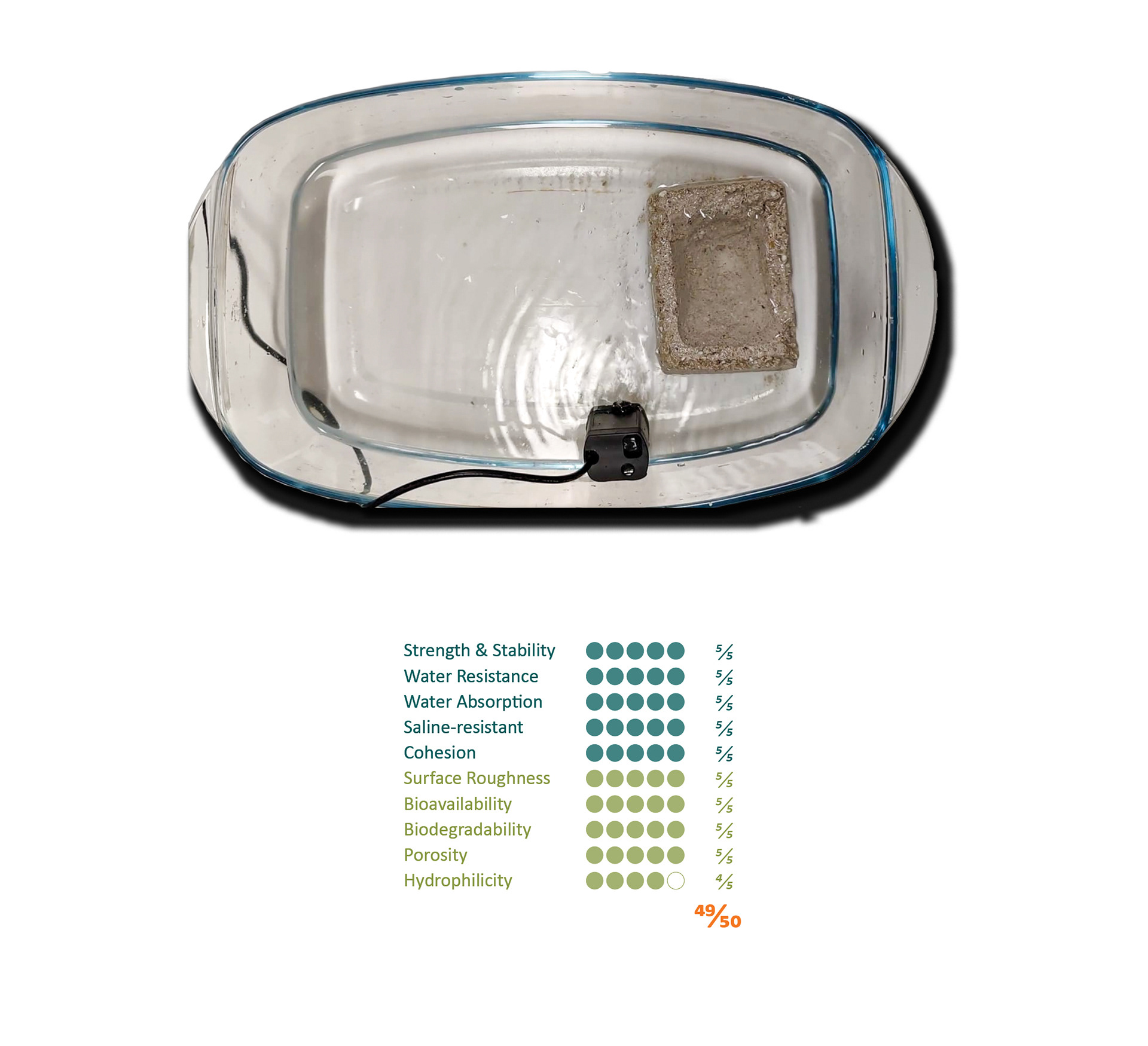
Tested in simulated marine water with circulation pump
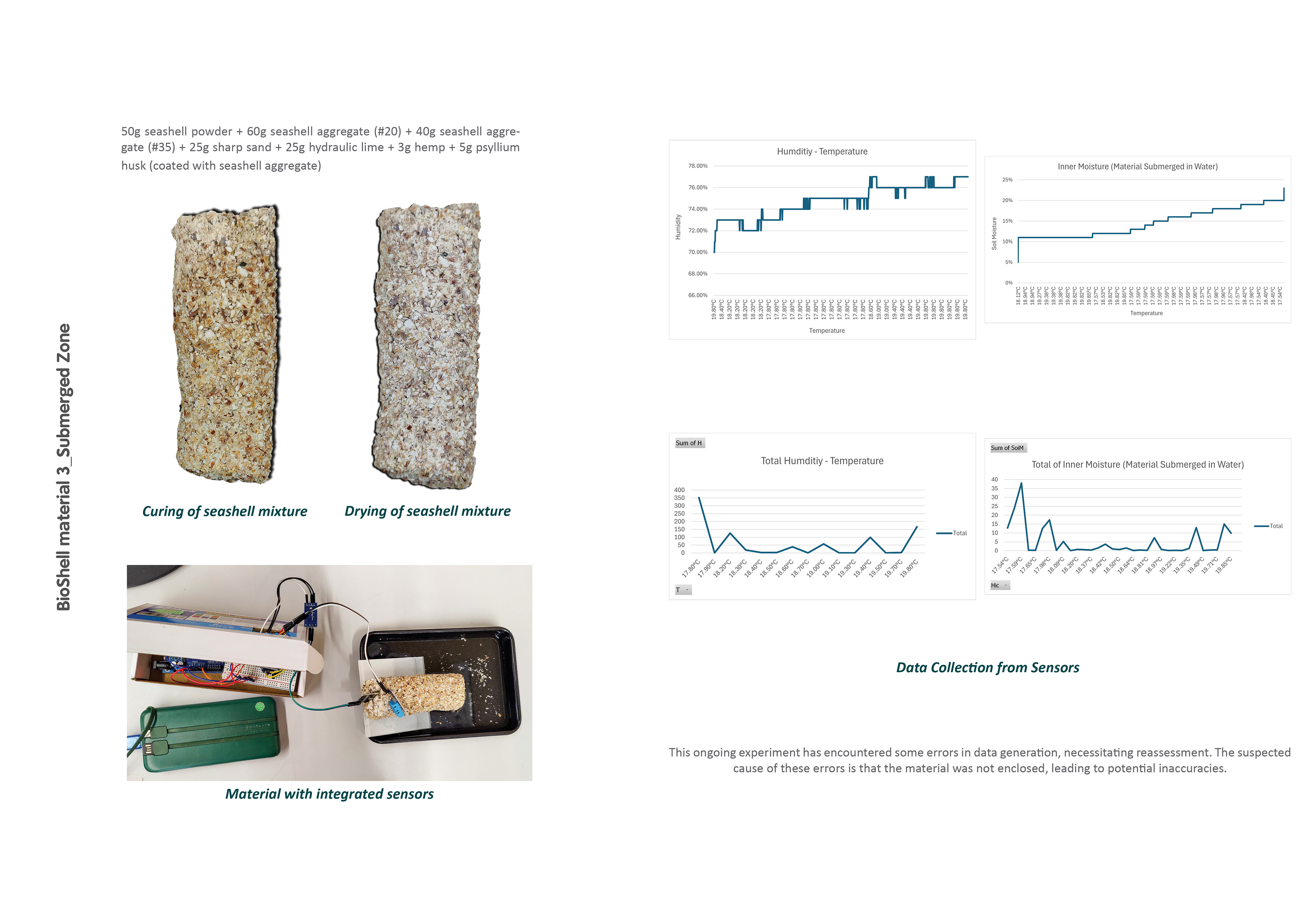
Bioshell Material 03 | Sensor-Integrated Prototype
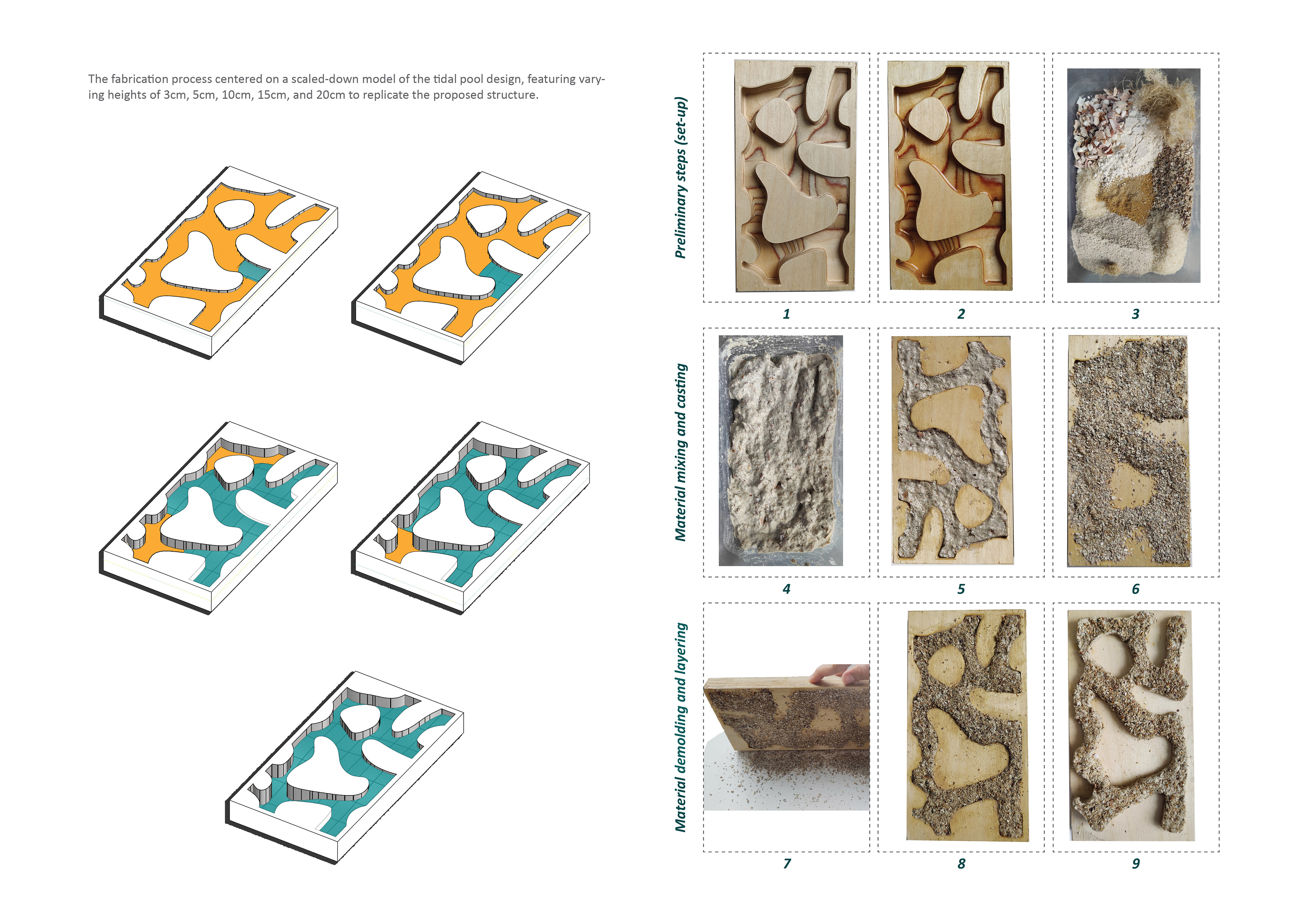
Fabrication | Bioshell 3 (Submerged Zone)
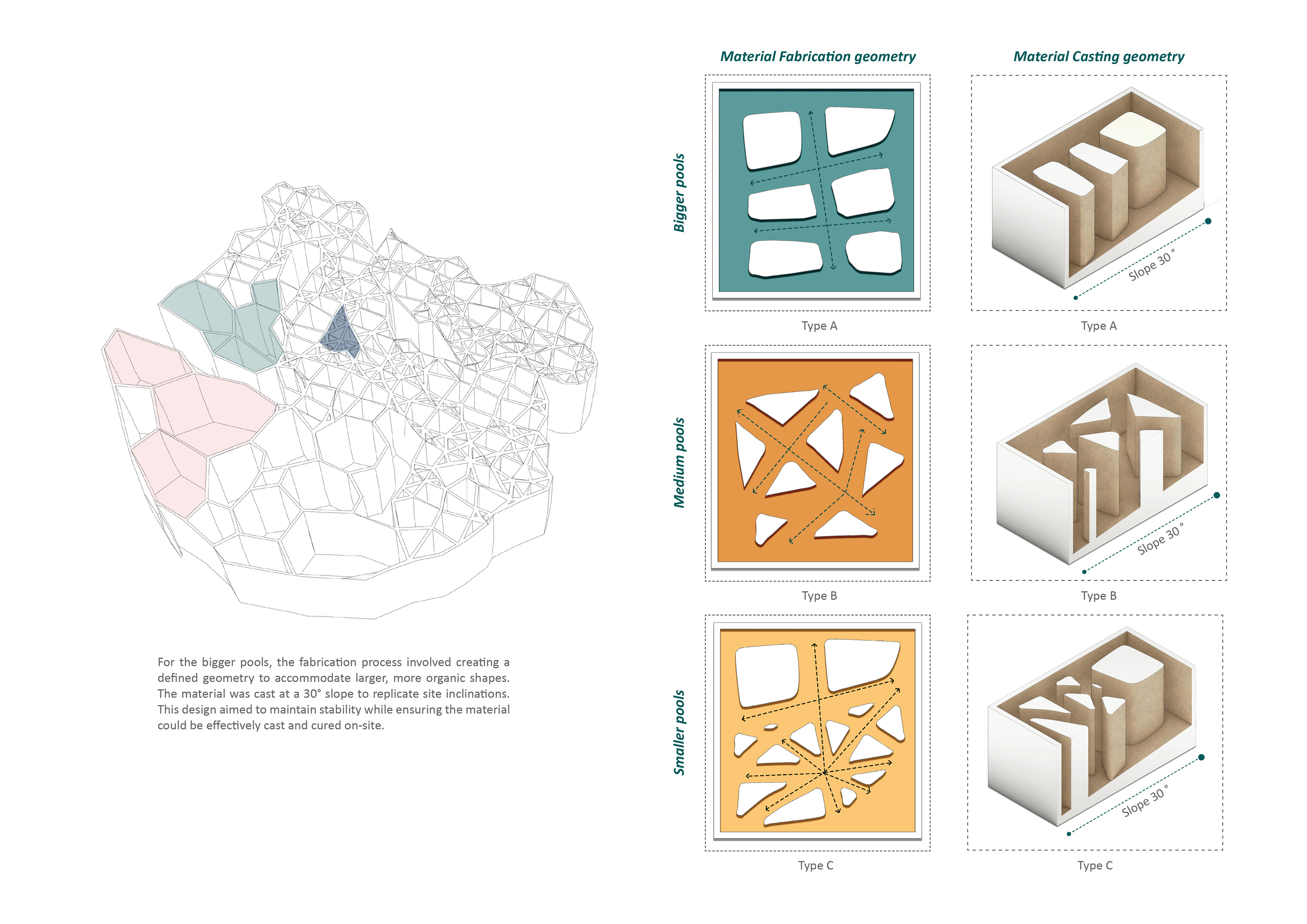
Multi-Material Bioshells : Digital Design
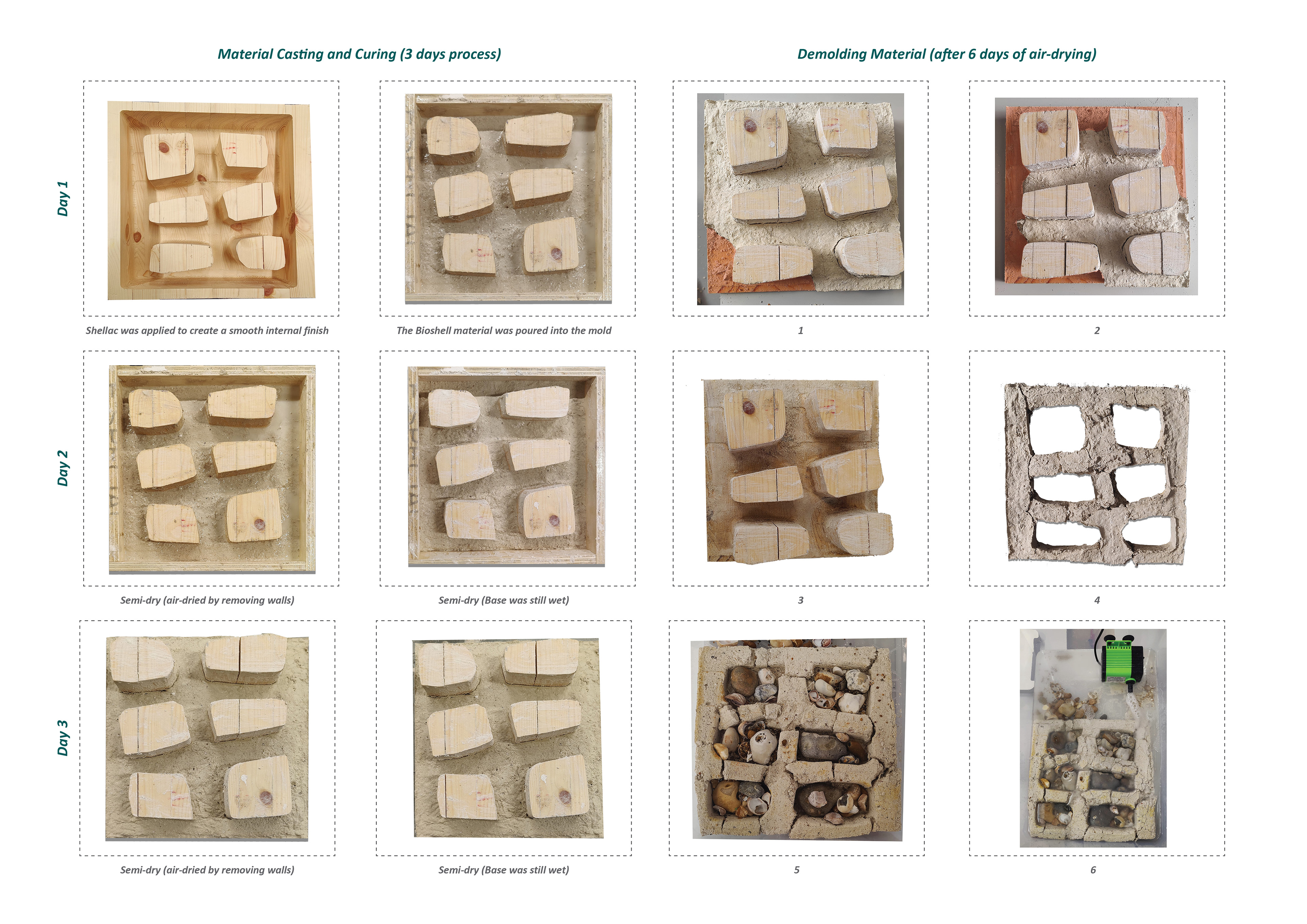
Multi-Material Bioshells : Fabrication Process
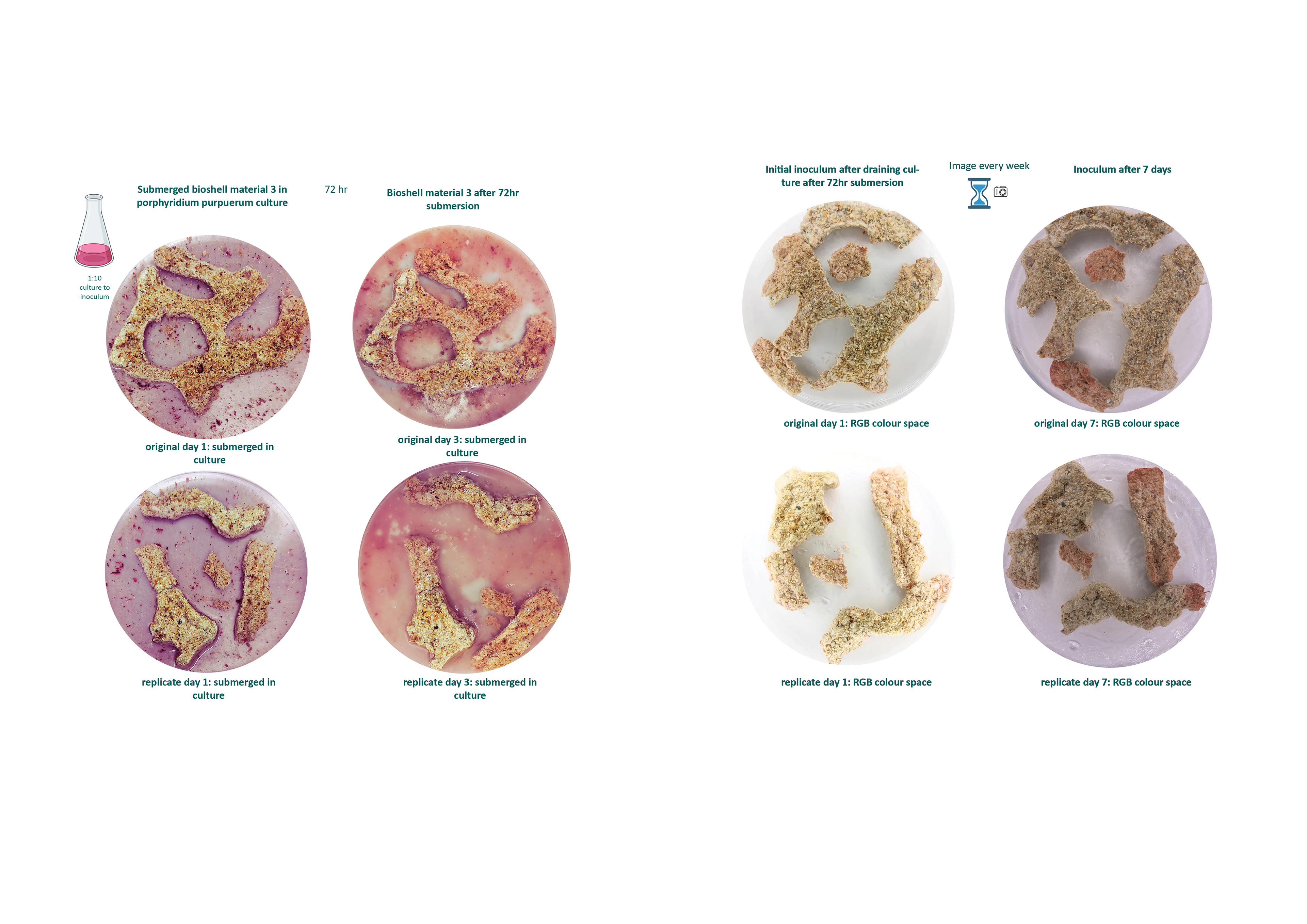
Bio-Material Fabrication | Inoculated Prototype Imaging
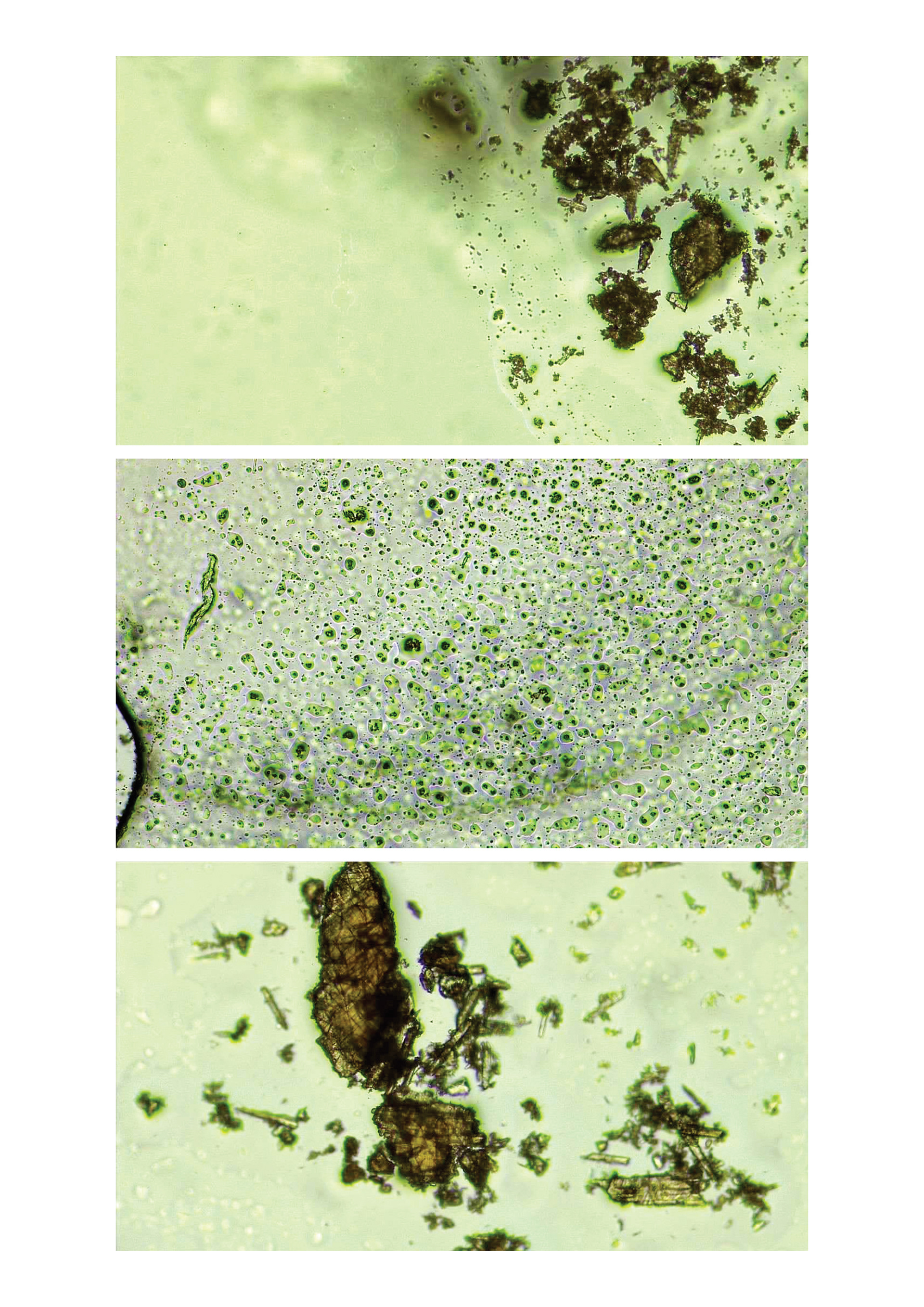
Initial Microscopic Observations
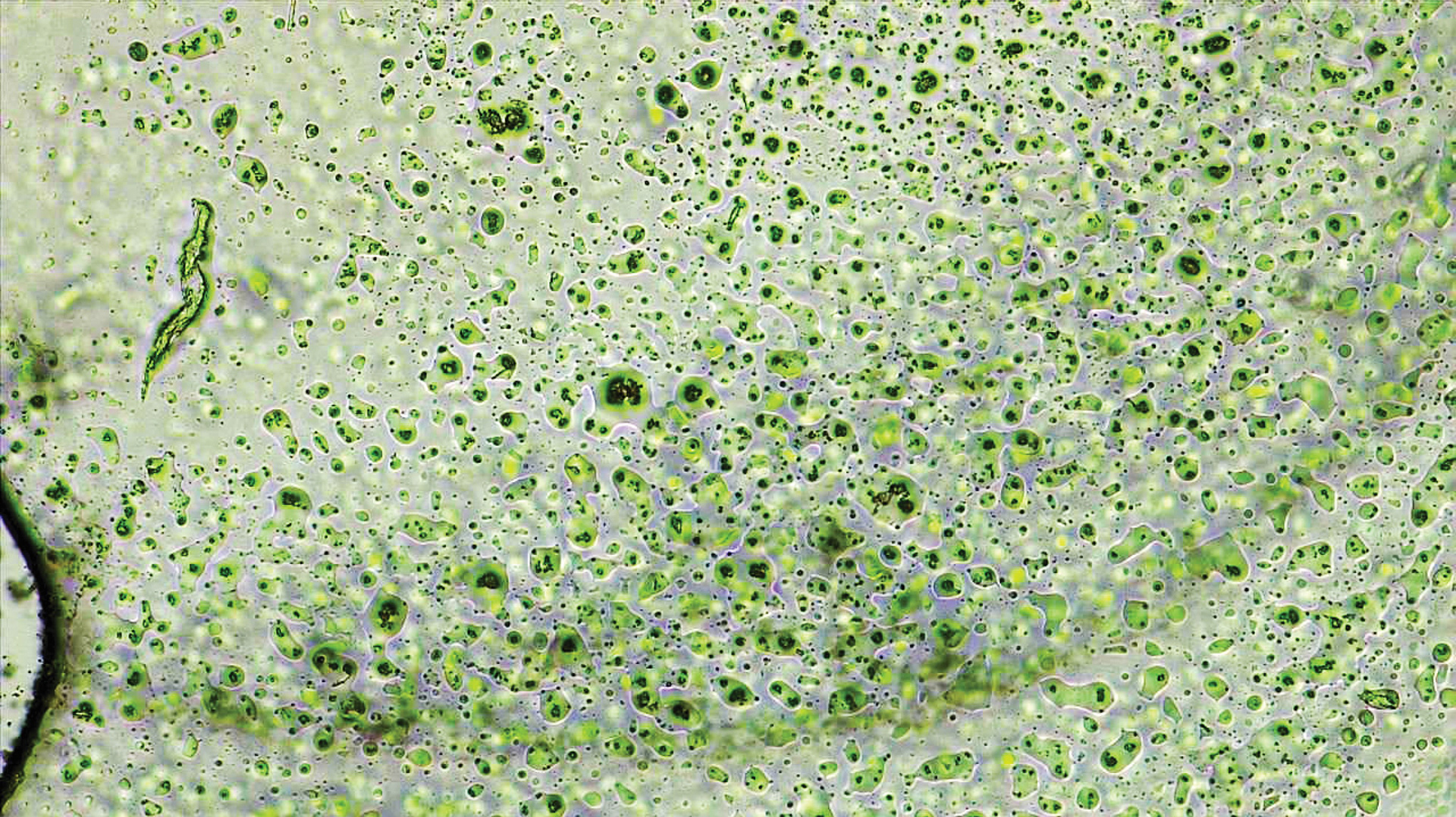
Material Bio-Receptivity
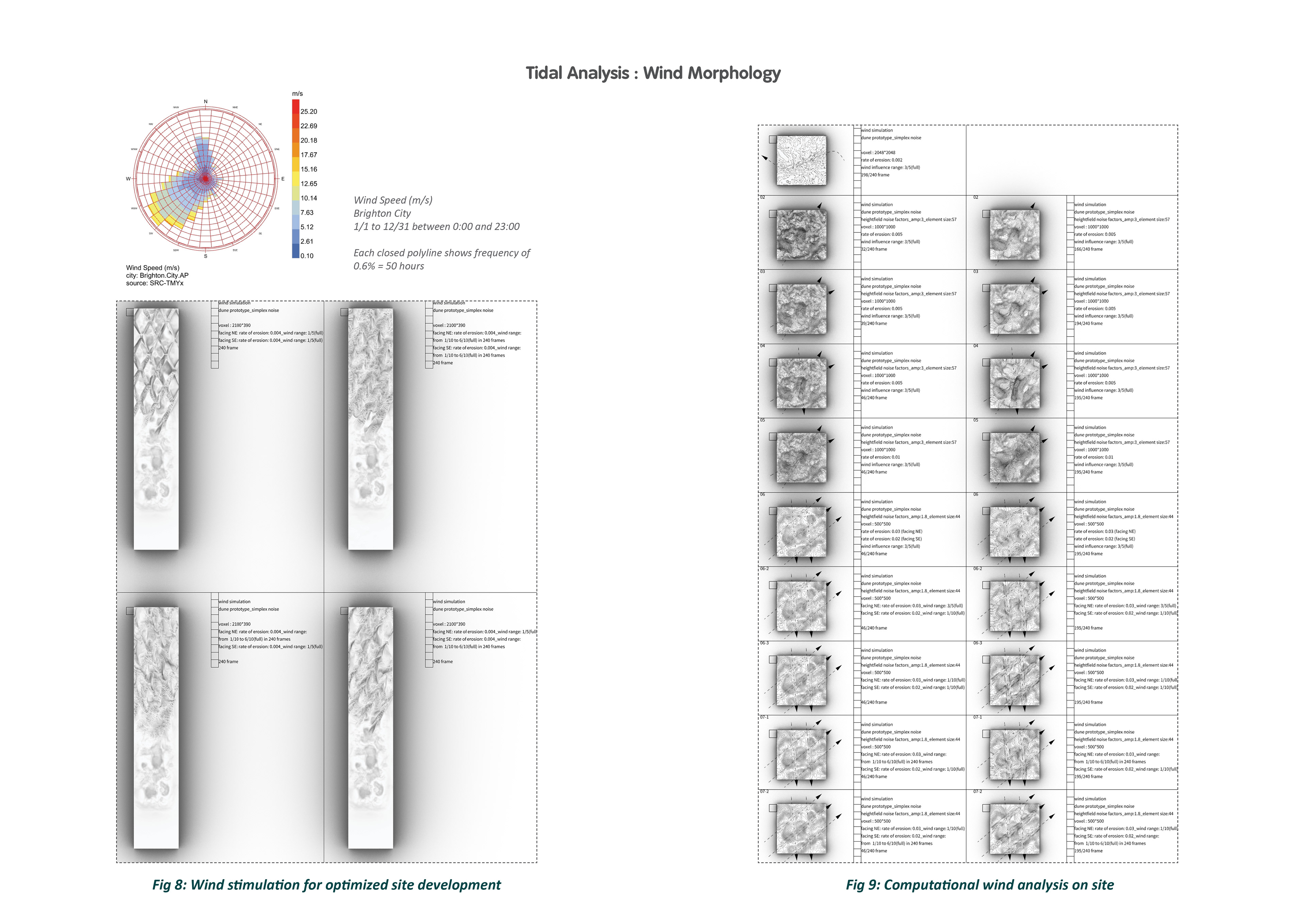
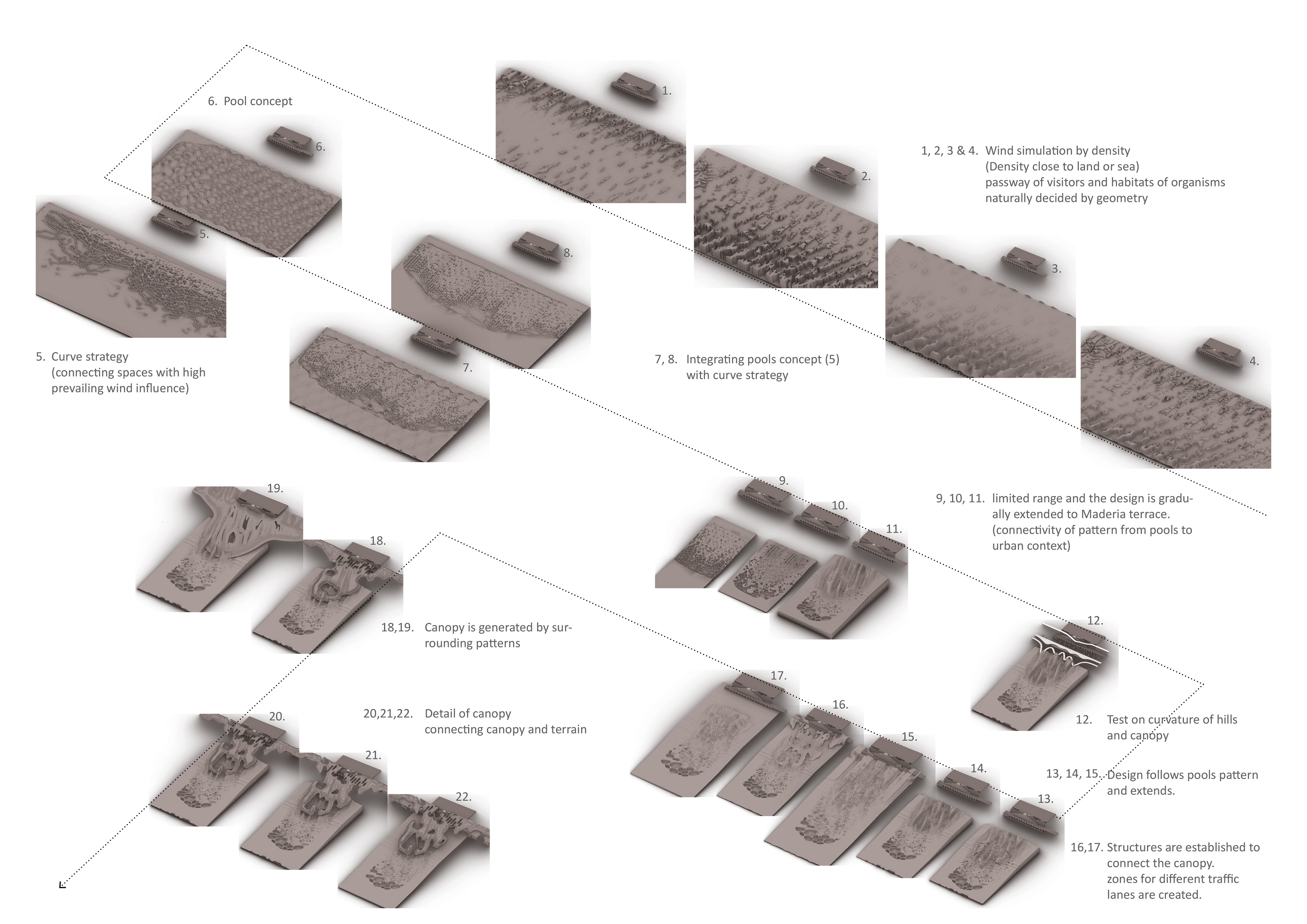
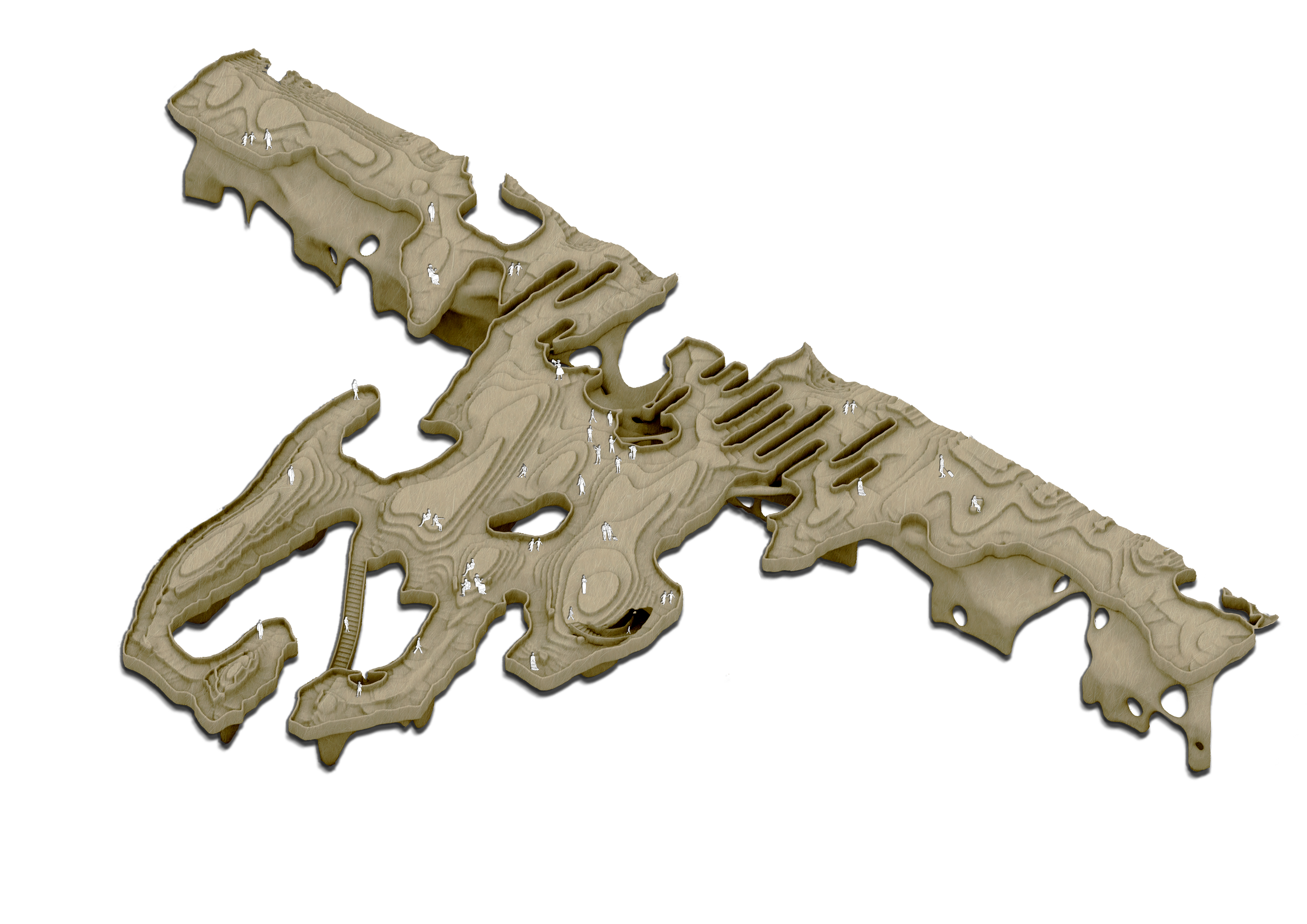
Form Unfolded: Axonometric Study
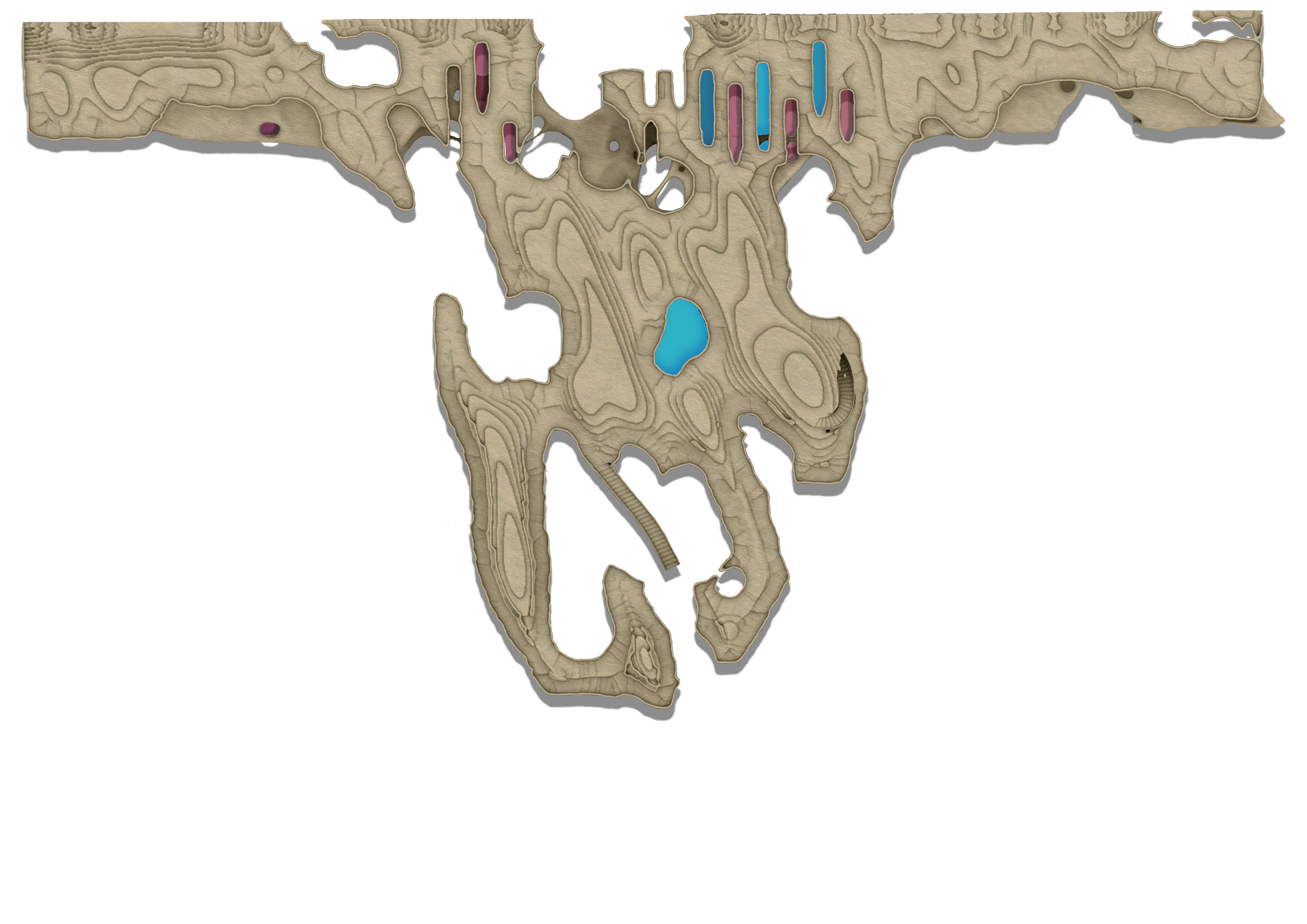
Spatial Logic in Plan
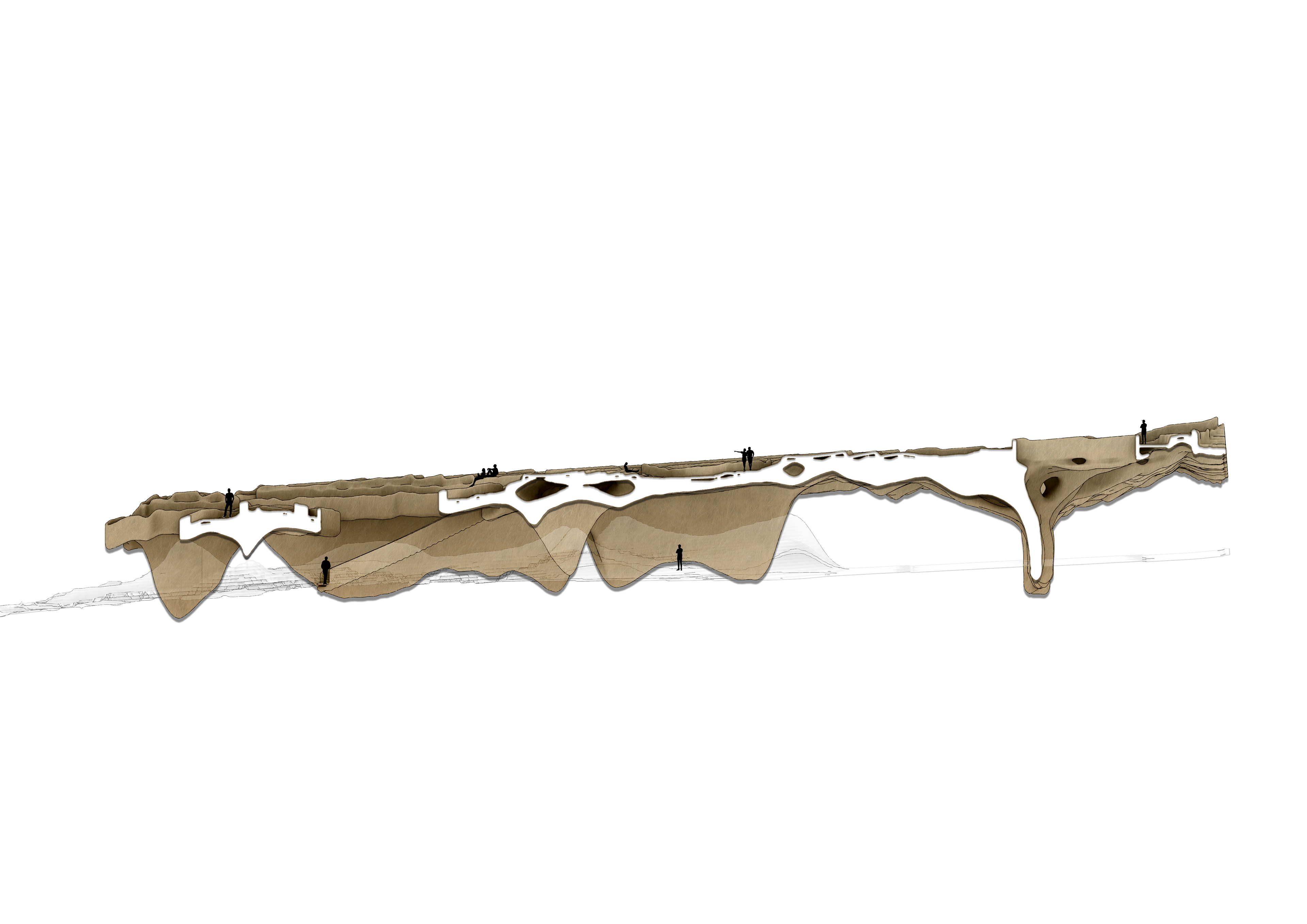
Sectional Depth of the Canopy
Conclusion & Reflections
Tidal Blooms represents a pivotal point in my design journey, where architectural thinking met ecological responsibility. This project allowed me to explore how spatial design, material science, and environmental data can converge to create responsive coastal interventions. Working with site-specific challenges along Brighton’s shoreline, I developed a deeper understanding of how architecture can meaningfully engage with shifting marine conditions.
A significant learning from this project was the potential of material systems—like the Bioshell series—not just as structural components, but as agents of ecological support. Designing across humid, partially submerged, and fully submerged zones taught me to adapt material performance to diverse environmental conditions. The hands-on process of prototyping, testing durability in lab-simulated marine water, and refining fabrication techniques strengthened my understanding of responsive design and iterative making.
Beyond the technical, Tidal Blooms reinforced my belief that architecture has the capacity to contribute positively to natural ecosystems. It shaped my perspective on how built environments can enable biodiversity, encourage public interaction with fragile landscapes, and serve as tools for climate resilience.
This experience has informed my approach as a designer—curious, research-driven, and grounded in material intelligence. It has reaffirmed my commitment to working at the intersection of architecture, ecological systems, and innovation, bringing forward design solutions that are both conceptually strong and environmentally attuned.